Spain's first general strike in 14 years brings mass protests and violent Barcelona clashes
Spain's first general strike in 14 years over housing and living costs has brought mass protests and violent clashes in Barcelona, ahead of a snap election later this month.
How it was covered
- BBC News carried 57% of the airtime and concentrated on transport disruption, union claims, political fallout and evening Barcelona violence.
- BBC One concentrated on mass protests, housing anger, Barcelona violence and election polling.
- Channel 4 concentrated on police clashes with picketers and Barcelona transport standstill.
- Channel 5, BBC Two, GB News, ITV and Sky News: not found in tracked broadcasts.
The Full Story
A plain summary built from the channels that reported this story. Facts only one channel reported are attributed to it.
Spain has held its first general strike in 14 years, with workers protesting over housing costs and the rising cost of living. The walkout disrupted transport and public services, and hundreds of thousands of people joined protests nationwide, according to BBC News. BBC One reported that more than 100,000 people protested in Madrid and tens of thousands more in other cities.
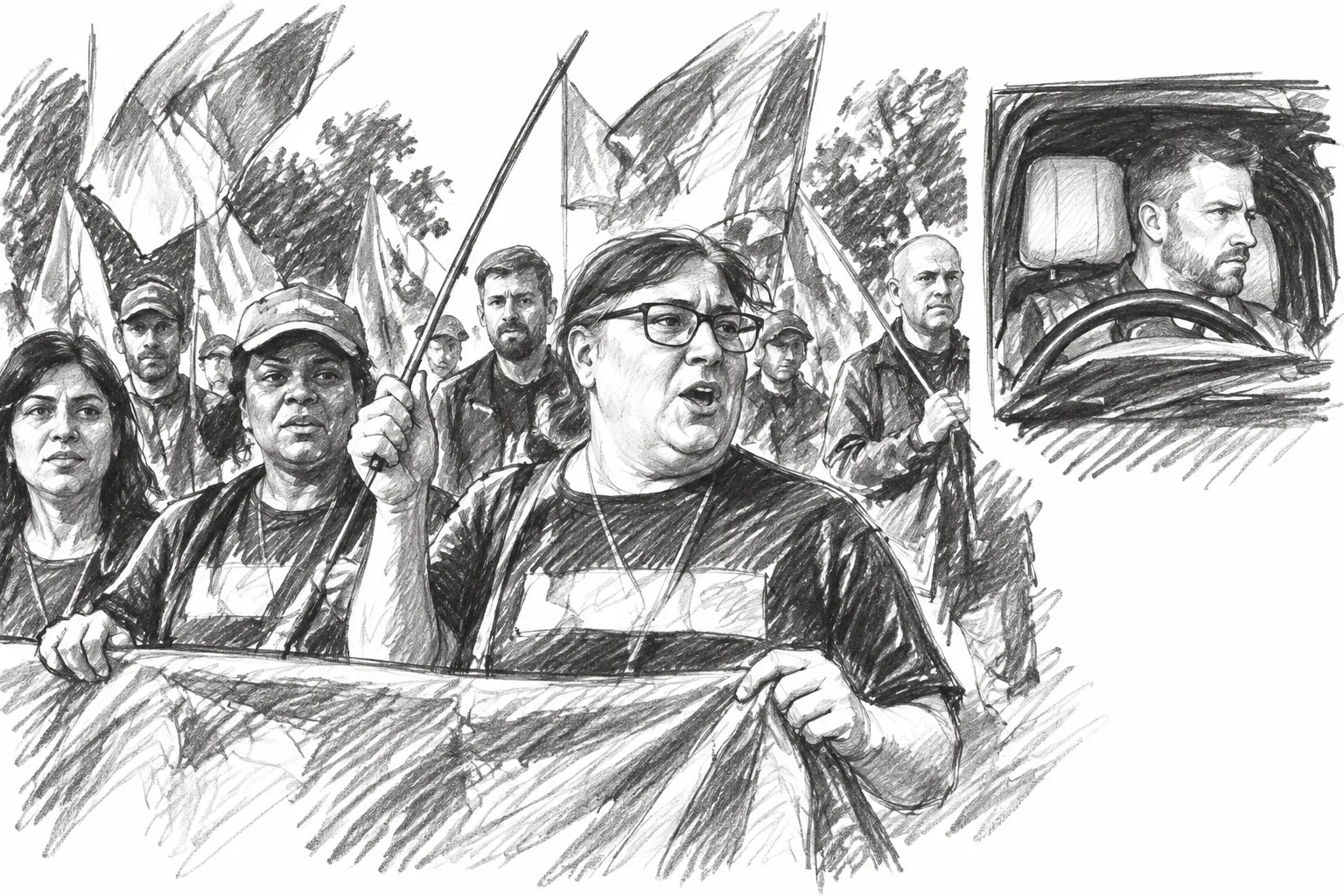
BBC News reported that schools and health services were affected and that some flights were grounded. Its Spain correspondent Guy Hedgecoe said Atocha railway station in Madrid, the country's biggest rail hub, was largely deserted in the morning even though many trains were running under guaranteed minimum services. He also reported roads blocked by strikers in some areas and some clashes with police.
Channel 4 reported that police clashed with picketers trying to block access to a wholesale market in Madrid, with similar scenes in Barcelona where public transport was at a standstill. BBC News reported that unions called the strike a success and said electricity demand was 10% lower than usual that morning because industry had scaled back. It also reported that average rents in Spain had almost doubled over the past decade, putting pressure on household budgets.
In Barcelona, there were violent scenes towards the end of the demonstration, with people vandalising shop windows, looting and burning wheelie bins, BBC News reported. Police made several arrests there, and around 60 arrests were made across Spain during the day, according to BBC News. BBC One reported that a small minority tried to break into shops in Barcelona and that violent clashes broke out at the end of the day.
BBC One reported that heavy rain fell in Madrid all day and that there were isolated scuffles in the capital. In its earlier bulletin it said Barcelona had seen more road blocks but no widespread violence like recent scenes in France at that point.
The eviction of an elderly woman, Maricarmen Abascal, triggered nationwide anger. BBC One reported that she was 87, that her pension could not cover a large rent increase, and that she died a fortnight later. BBC News said she was 89 in its morning coverage, and a later BBC News programme gave her age as 18, an apparent error. Her case helped push housing to the centre of the election campaign.
Prime Minister Pedro Sánchez called the snap election for 29 November after Congress rejected his urgent housing measures, BBC News reported. The government unusually backed the strike. BBC News reported that the government called affordable housing a right Spaniards should defend. Parties on the right criticised the strike and questioned its turnout, BBC News reported. BBC One reported that polls suggested the centre-right and far-right were on course to gain power.
Key Claims
Claims reported during this story's coverage, grouped by how many channels reported each one. Select a dot to see the source excerpt.
| Claim |  |  |  |
|---|---|---|---|
| Reported by all 3 channels | |||
| Clashes broke out in Barcelona after peaceful protests, with a small minority attempting to break into shops. | |||
| During the strike, police clashed with picketers trying to block a wholesale market in Madrid, with similar scenes in Barcelona where public transport was at a standstill, and roads were blocked in some areas. | Reported by BBC One | ||
| Spain held its first general strike in 14 years over housing and cost-of-living pressures, affecting schools, health services and flights. | |||
| Thousands of people took to the streets across Spain to protest over housing and the cost of living. | |||
| Reported by a few · 2 channels | |||
| Labour unions described the strike as a success so far, citing a 10% drop in industrial electricity demand that morning. | Reported by BBC One | Not reported by Channel 4 | |
| The strike was linked to the September eviction of 89-year-old Maricarmen Abascal from her Madrid home. | Not reported by Channel 4 | ||
Channel Perspectives
What each channel focused on, with key quotes.
BBC News gave the fullest account of the disruption, using its Madrid correspondent Guy Hedgecoe to describe deserted transport hubs and union claims about lower electricity demand. It also covered the political fallout, including government support for the strike, right-wing criticism, the November election and the evening violence in Barcelona. Its two broadcasts moved from practical impact in the morning to arrests and political positioning at night.
- “workers across Spain are taking part in the country's first general strike in 14 years”
- “the labor unions which have supervised this strike say that so far it's been a success they've reported that there's been 10% less demand for electricity so far this morning”
- “In Barcelona, towards the end of the demonstration there, we saw that there were violent scenes as people were vandalising shop windows, looting, burning wheelies and so on.”
Channel 4's short summary treated the strike as a straightforward day of nationwide disruption, highlighting police clashes with picketers and the standstill in Barcelona. It gave little political context and did not mention the upcoming election or the eviction that triggered the protests. Its framing was concise and event-led.
- “Protests and rallies are being held around Spain as workers take part in a 24-hour general strike over the housing crisis and the rising cost of living.”
- “Police clashed with picketers who tried to block access to a wholesale market in Madrid with similar scenes in Barcelona where public transport was at a standstill.”
- “It's Spain's first nationwide strike for 14 years.”
BBC One West led with vivid street reporting from Madrid and Barcelona, stressing the scale of public anger over rents and the heavy rain. Its later bulletins added the end-of-day violence in Barcelona and the political backdrop of the snap election, including poll expectations. It gave more space to ordinary protesters' voices than to union claims or detailed labour disruption.
- “Struggling to pay the rent is something millions can identify with. Today Spaniards took their anger over housing to the streets”
- “There have been some violent clashes between police and protesters in Barcelona tonight at the end of a day of disruption in Spain's first general strike for 14 years”
- “It's impossible to live here”
Who was on air
People and organisations each channel put on air while covering this story. Channels' own presenters and reporters are not listed. Names as transcribed, and the list can miss people.
- 18:19 GMT
Gonzalo Alvarez, 27 year old
BBC News · Wed 11 Nov
Broadcast Timeline
News broadcasts tracked for this story, in time order.