Sir Mark Rowley backs plan to cut police forces to eight to 10
Sir Mark Rowley, the Metropolitan Police Commissioner, is calling for the 43 police forces in England and Wales to be cut to eight to 10 regional forces, warning that policing will fail without urgent reform.
How it was covered
- BBC One carried 42% of the airtime and concentrated on pressures on police, rural objections and merger costs.
- Channel 4 concentrated on Rowley’s case, Scotland’s caution and political lobbying criticism.
- BBC Two and ITV: not found in tracked broadcasts.
- BBC News, GB News and Sky News: covered online, not found on air.
The Full Story
A plain summary built from the channels that reported this story. Facts only one channel reported are attributed to it.
Sir Mark Rowley, the Metropolitan Police Commissioner, has called for urgent reform of policing in England and Wales. He warned that the current system is heading for failure and proposed replacing the 43 separate forces with eight to 10 large regional forces. Channel 5 described the plan as creating around nine super forces.
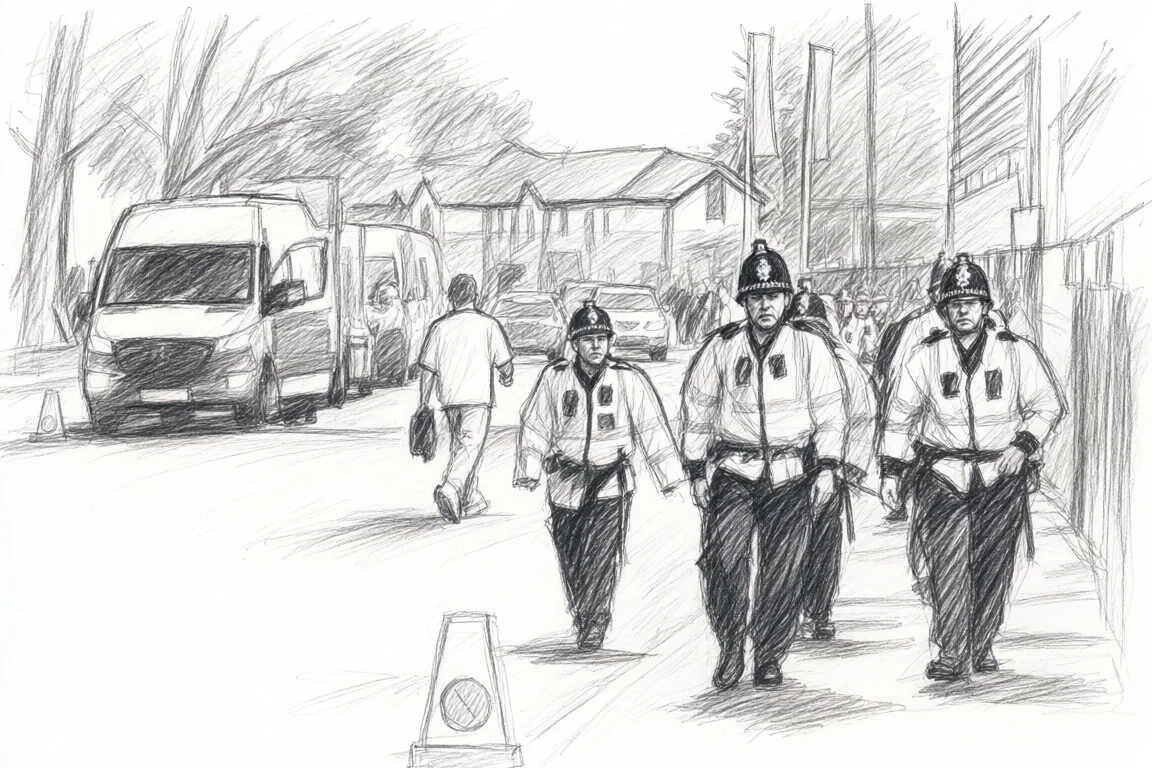
Under the proposal, a new National Police Service would sit above the regional forces and tackle the most complex crimes. Channel 5 reported that it would cover terrorism, fraud and organised crime and oversee technology for the regional forces. It said the regional forces would handle murders, drugs and county lines. The plans would put savings into local policing teams, with targets on 999 calls and response times, and add 13,000 neighbourhood and community support officers, Channel 5 reported.
Rowley said the 43-force structure was overstretched and unable to keep pace with organised crime, cyber attacks and online abuse. BBC News reported he argued that local policing teams could not win without specialist support in surveillance, financial investigation, firearms and other covert work. It also reported he said 20 years of trying to make 43 forces collaborate on advanced technology had gone too slowly.
BBC News reported that police and crime commissioners in rural areas feared mergers would take resources to high-crime city areas and leave smaller towns with less policing. It also reported estimates that merging forces could cost more than £1 billion. BBC News said the Home Secretary had launched a consultation on the future of policing earlier this year.
Channel 4 reported that Scotland's merger of forces more than a decade ago was found to have created systemic problems at cost. It said critics argued the changes could consume the savings promised. Channel 4 also reported that some critics accused senior officers of crossing a thin blue line into politics. Channel 5 reported a critic saying that creating mega forces would cost millions when policing had little free money.
Daniel Sandford, BBC News UK correspondent, said there was agreement on a new national police service but disagreement over creating eight, nine or 10 regional mega forces. He said smaller forces could not be experts in everything, but the Cheshire chief constable argued that a bigger force could pull specialist teams away to inner-city areas. The new prime minister's position on the plans is not yet clear.
Emma Vardy, reporting for BBC News, said Middlesbrough had the highest recorded crime rate of any force area in England and Wales. Its chief constable told the BBC that his force had seen the largest decrease in officers since 2010. Channel 4 reported that the region's chief constable backed the reforms, saying his force was doing the best it could with what it had.
Rowley argued that major structural change was the only option and that the cost of standing still was that criminals would win.
Key Claims
Claims reported during this story's coverage, grouped by how many channels reported each one. Select a dot to see the source excerpt.
| Claim |  |  |  |
|---|---|---|---|
| Reported by all 3 channels | |||
| Rowley backed plans to cut police forces from 43 to as few as eight super forces with a new national police service, as part of urgent reforms in England and Wales. | |||
| Rowley said the current 43 forces were overstretched and struggling to keep pace with sophisticated criminals. | |||
| Rowley warned that policing faces failure without sweeping changes and said the choice was reform or fewer officers on the beat. | |||
| Only on one channel | |||
| Rural police and crime commissioners warned that merging police forces would leave smaller towns and communities with less protection, with resources drawn to high-crime areas. | Not reported by Channel 5 | Not reported by Channel 4 | |
Channel Perspectives
What each channel focused on, with key quotes.
Channel 4's lunchtime summary was brief and framed the plan as government-backed. Its evening report dug into the case for reform and the risks, including Scotland's merger experience and accusations of political lobbying by senior officers.
- “In a speech later today, he will warn that the policing system is heading for failure without sweeping changes.”
- “The lessons from Scotland suggest that doing the same reforms in England and Wales would drink many of the savings that are presented.”
- “This is another public intervention on political ground by Britain's most senior policeman.”
The channel framed the story as a choice between reform and fewer officers on the beat. Its evening package added detail on a national police service, around nine super forces, extra neighbourhood officers and response-time targets, while carrying a critic's cost warning.
- “He wants the number of forces cut from 43 to as few as eight with a new national police service on top.”
- “He says it's a choice between reform or fewer officers on the beat.”
- “I disagree that the answer to that is to create these mega forces that will cost you know millions of pounds to do”
BBC One West led its bulletin on Rowley's warning and gave the fullest account of pressures and objections, including Middlesbrough's crime rate, rural commissioners' fears, a possible £1 billion cost and the uncertain view of the new prime minister. It used a package from Emma Vardy and studio analysis from Daniel Sandford on whether mega forces would drain specialist resources from successful smaller forces.
- “the head of the Metropolitan Police Sir Mark Rowley has predicted that policing in England and Wales would be heading for failure unless there's urgent reform”
- “There are also concerns about the cost of such a radical Reorganization with estimates that merging forces could cost more than a billion pounds”
- “just inevitably resources get taken into the highest crime areas into the cities and Rural areas and small towns Don't get as much policing”
Who was on air
People and organisations each channel put on air while covering this story. Channels' own presenters and reporters are not listed. Names as transcribed, and the list can miss people.
- 13:03 GMT
Mark Rowley, the Metropolitan Police Commissioner
BBC News at One including · Fri 6 Nov
- 19:26 GMT
Mark Rowley, Met Police Commissioner
Channel 4 News · Fri 6 Nov
- 17:11 GMT
Mark Rowley, Metropolitan Police Commissioner
5 News with Dan Walker · Fri 6 Nov
Broadcast Timeline
News broadcasts tracked for this story, in time order.