SpaceX catches Starship upper stage despite lower booster failure
SpaceX caught its Starship upper stage with mechanical arms at a Texas launch tower 22 hours after launch, a reusability milestone, but the lower booster had failed.
How it was covered
- BBC News carried 53% of the airtime and concentrated on expert analysis of scale, reusable economics and the Moon race.
- Channel 4 concentrated on the catch, failed booster and Musk's political influence.
- Channel 5 and BBC One: not found in tracked broadcasts.
- GB News: covered online, not found on air.
The Full Story
A plain summary built from the channels that reported this story. Facts only one channel reported are attributed to it.
SpaceX has successfully caught its Starship upper stage with mechanical arms at a launch tower in Texas. The stage returned to the tower 22 hours after launch, the first time an upper stage has come back to an upright position at its launch site. The arms are known as chopsticks. The upper section caught was 170 feet (about 52 metres) long, Channel 4 reported.
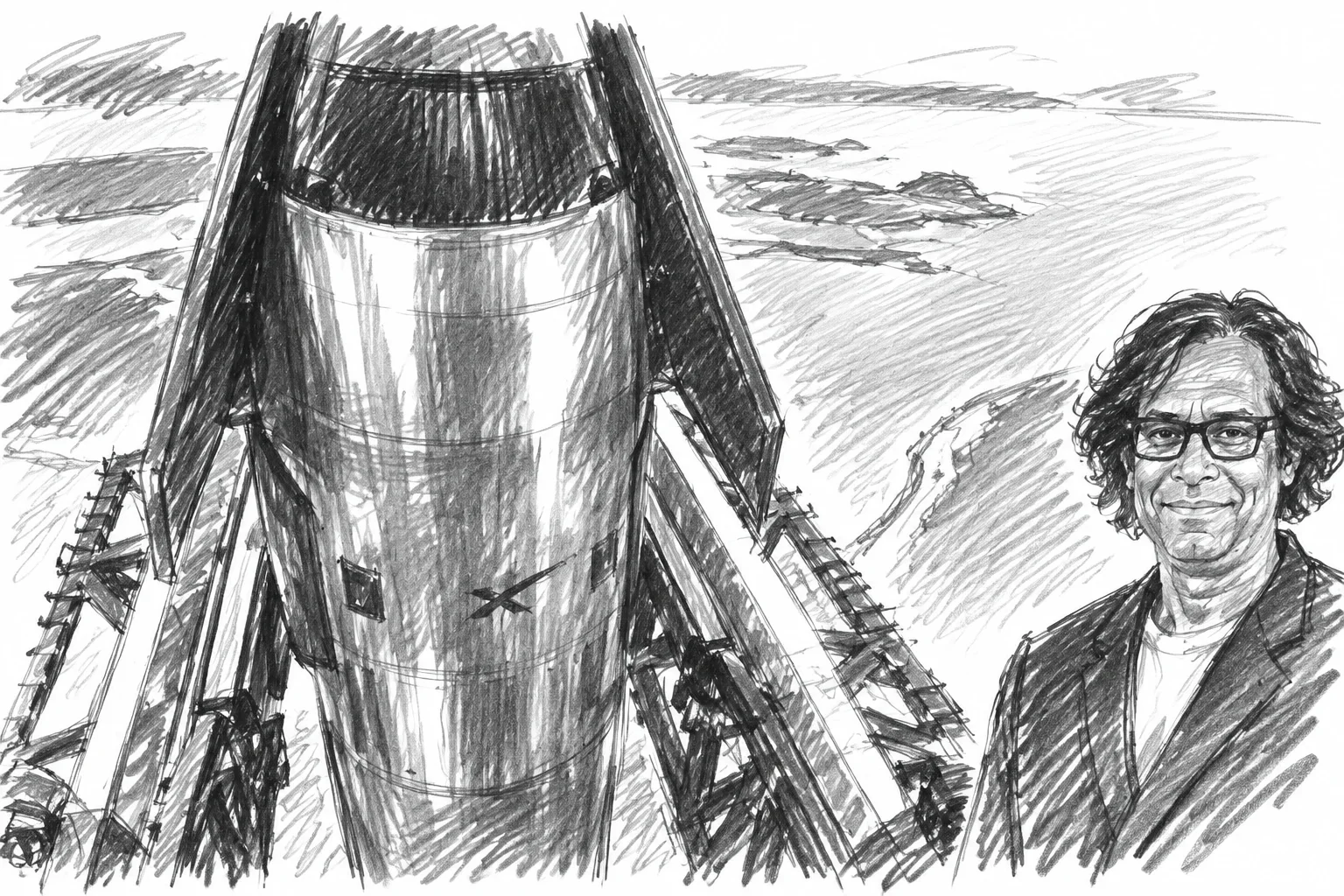
The mission was not a complete double success. On Friday, the lower booster suffered a malfunction and exploded over the Gulf of Mexico, Channel 4 reported. BBC News said SpaceX had hoped to catch the bottom part as well, but that part of the mission was aborted a few minutes after launch. Sky News reported that the rocket boosters were filmed crashing into the ocean in a ball of flames 10 minutes after take-off. Channel 4 reported that SpaceX has caught the lower part before, showing the rocket can be caught and reused.
SpaceX wants Starship to be fully reusable so it can fly repeatedly and cut costs, BBC News reported. Libby Jackson, head of space at the Science Museum in London, told BBC News that the whole rocket is 124-odd metres tall and is the biggest thing ever flown. She said reusing the whole system at that scale could bring down launch costs and make space more accessible. BBC News also reported that Starship's progress has direct implications for NASA's attempt to land humans on the Moon by 2028. Jackson said China wants to land humans there by 2030 and the US does not want to cede ground.
Channel 4 reported that the mission came amid political scrutiny of SpaceX owner Elon Musk. It said Democrats plan to examine how he wields power after their midterm wins, and that he spent nearly $450 million backing Republican candidates. The same mission released 26 Starlink satellites, Channel 4 reported, and Musk has ambitions to launch 30 rockets like this a day by 2030.
Key Claims
Claims reported during this story's coverage, grouped by how many channels reported each one. Select a filled dot (or logo) to see the source excerpt. A hollow dot (or faded logo) means the channel reported it but no excerpt is linked.
| Claim |  |  |  |  |
|---|---|---|---|---|
| Widely reported · 3 or more of 4 channels | ||||
| SpaceX caught the Starship upper stage with a mechanical arm at its Texas launch tower, after an earlier attempt to catch the lower stage was aborted. | ||||
| SpaceX aims to make Starship fully reusable so it can fly repeatedly and reduce costs. | Not reported by ITV | |||
| Reported by a few · 2 channels | ||||
| An attempt to catch the lower stage of the rocket was aborted shortly after launch, and it crashed into the ocean. | Not reported by BBC News | Not reported by ITV | ||
| Only on one channel | ||||
| Musk wants to launch 30 similar rockets per day by 2030. | Not reported by BBC News | Not reported by ITV | Not reported by Sky News | |
| Starship's progress has direct implications for NASA's attempt to land humans on the Moon by 2028. | Not reported by Channel 4 | Not reported by ITV | Not reported by Sky News | |
| The mission deployed dozens of Starlink satellites over multiple orbits, with 26 reported released. | Not reported by BBC News | Not reported by ITV | Not reported by Sky News | |
Channel Perspectives
What each channel focused on, with key quotes.
Sky News gave the catch a short, straight news treatment, framing it as a step towards a fully reusable rocket. It was the only channel to put the 10-minute ocean crash of the boosters in the same item, but it offered no expert analysis or NASA context.
- “SpaceX is now one step closer to achieving a fully reusable rocket”
- “It's the first time in history the upper stage of a rocket has returned to a safe and upright landing”
- “The rocket boosters were filmed crashing into the ocean in a ball of flames 10 minutes after take-off”
ITV1 treated the catch as a brief, upbeat closing item, calling the return triumphant. It stressed the first-ever upright return and the prospect of rocket reuse, but did not mention the failed lower booster or give technical detail.
- “SpaceX's Starship has made a triumphant return to Earth.”
- “it was caught mid-air by giant mechanical arms known as chopsticks, where its journey began 22 hours earlier.”
- “It is the first time in history a rocket has returned to an upright launch position and could pave the way for rockets being reused.”
BBC News led with a full explainer, including a studio interview with Libby Jackson of the Science Museum. It focused on the rocket's scale, the economics of reusability and the strategic stakes of NASA's 2028 Moon goal, while also noting the aborted lower-stage catch.
- “It is staggeringly big.”
- “We've had reusable spacecraft before, we've had reusable rockets before, but for the whole system at such a big scale, that does offer a lot of potential to the space sector to bring down launch costs and make space more accessible.”
- “The progress of Starship has direct implications for NASA's attempt to land humans on the moon by 2028.”
Channel 4 ran a fuller package that set the catch against the failed lower booster and SpaceX's broader commercial and political power. It was alone in covering Elon Musk's political scrutiny and Starlink's role, while also giving the 14-orbit mission profile and 170-foot upper section.
- “After flying 14 times around Earth, it's about to be caught by this giant's mechanical arms, also known as chopsticks.”
- “The landing was supposed to be a historic double catch.”
- “But it's not just his trillions that has given Musk so much political weight.”
Broadcast Timeline
News broadcasts tracked for this story, in time order.