Daily analysis
Tuesday 3 November 2026
What happened
Editorial
AI-generated commentary on the day's coverage.
The King’s Antigua visit turned on what an apology would mean
King Charles spoke in Antigua of the slave trade as a shameful chapter that still casts a shadow, saying it filled him with horror and “the most profound personal sorrow”. He did not apologise. That distinction drove a debate over whether acknowledgement was a beginning or a substitute for action.
Prime Minister Andy Burnham said Britain was open to structured dialogue and listening to calls for a formal apology, but ruled out financial reparations. Caribbean leaders and campaigners continued to press for debt relief and investment in health and education. Antigua and Barbuda’s prime minister, Gaston Browne, argued that refusing compensation did not remove the need for reparations; Bell Ribeiro-Addy said a formal apology would cost nothing.
Channel 4 centred campaigners and academics, asking whether an apology without money or wider change would mean much. BBC News followed the policy shift and its limits; BBC Two’s Politics Live debated who should pay. GB News rejected apology and payment, calling the proposal a scam. ITV gave more space to the royal tour’s personal detail, including the King caught in heavy rain. The speech became a diplomatic opening, a debate over structural justice or an argument for refusal, depending on the channel.
Election coverage looked ahead while voters were still at the polls
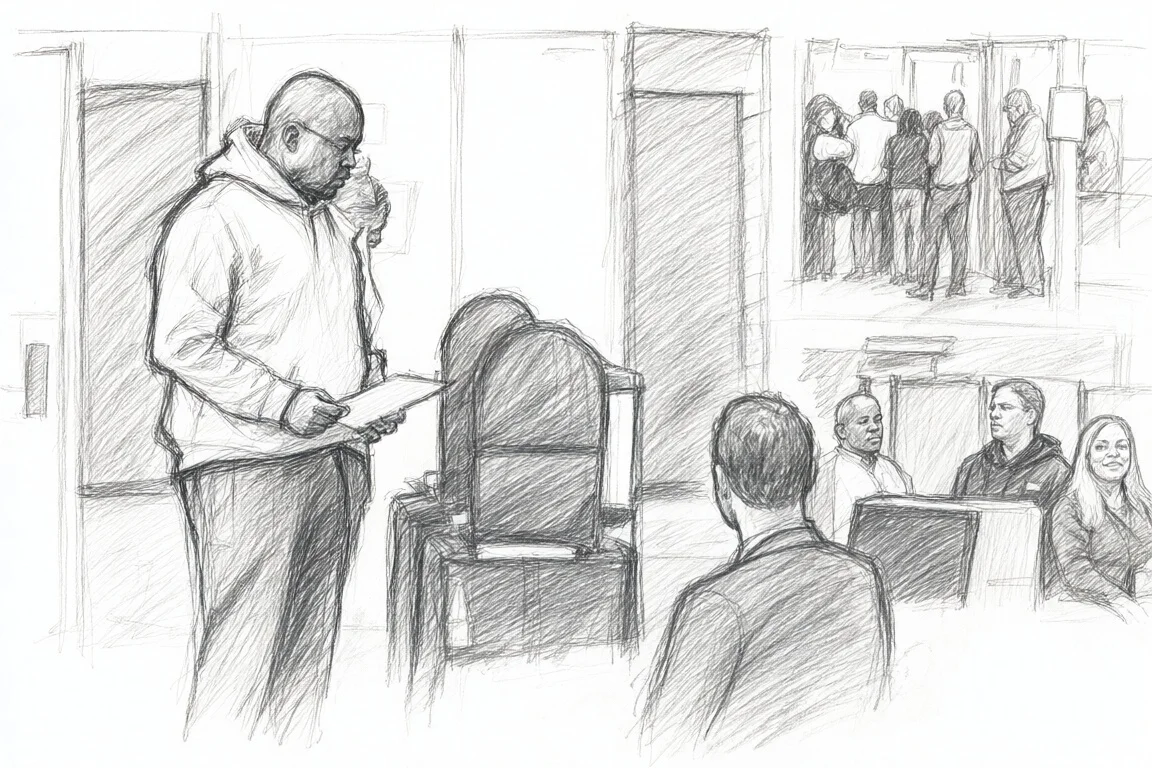
The US midterms filled bulletins with the balance of Congress, the cost of living and Donald Trump’s presidency. BBC News followed turnout and state races; Channel 5 used voters and a Kentucky distillery to show the economic story. ITV presented the vote as a chance to restrain Trump, while GB News questioned predictions of a Democratic wave and focused on divisions in Texas and Michigan. Channel 4 centred Democratic divisions over Israel.
The day’s other US election story looked beyond the count. On Newsnight, Andrew Neil expected Republicans to lose the House and possibly the Senate, warning that Trump could become “more unstable, more reckless and more dangerous”. Helen Lewis thought he already seemed “quite lame duckish”; former administration spokeswoman Tricia McLaughlin argued that a loss would embolden him on immigration and foreign policy. These were forecasts, not accounts of results. That distinction mattered on a day when ballots were still being cast.
A US strike on an Iranian island added an immediate complication. Sky News examined the timing and possible divisions inside the White House. BBC News was more guarded, attributing the report to US officials and noting that the Pentagon had not confirmed it. Both linked the strike to voters’ concerns about the war and fuel prices, but the available accounts did not establish the operation’s wider purpose.
A supermarket cyber attack became a question of resilience
Reports of hackers changing remote refrigeration settings gave the day a story that moved from spoiled food to the security of everyday infrastructure. The BBC described supermarkets in several European countries throwing away stock, including an estimate of €100,000 in one Belgian store. Its own bulletins differed on the number of Belgian supermarkets affected: an early report said about 70, while a later one put around 40 in Belgium and Luxembourg. Channel 4 and Channel 5 said British meat-processing firms were also affected, though they described the number differently.
The emphasis shifted with the outlet. BBC News added technical context about why so many units remained online. Sky News looked at legacy industrial controls and weak security. Channel 4 made the National Cyber Security Centre’s warning about outdated technology and critical infrastructure central; Channel 5 paired the incident with consumer advice and the government’s cyber security response. The immediate damage was discarded food, but the reports raised a more practical question about systems that keep shops and essential services running.
Breaking stories came with different levels of certainty
Several other reports showed how quickly early accounts can change. Broadcasters reported suspected bomb threats on at least seven European flights, including two departing from the UK. All landed safely and no explosives were found. ITV described a deliberate attempt to cause disruption, while BBC News asked whether the unusual number of threats pointed to coordination. The evidence in the coverage established the hoaxes and disruption, not who was behind them.
The day also included a High Court ruling refusing an injunction against publication of abuse allegations, while the subject remained anonymous pending a possible appeal. BBC News focused on the judge’s reasoning, including his acceptance that the suicide risk was genuine; Channel 4 and Newsnight framed the decision more directly around press freedom. ITV repeatedly noted the continuing anonymity. Across these stories, emphasis and caveats shaped what viewers heard.
The day's stories
Every story that got more than a minute of airtime, ranked by how much it got across all channels.
- 1Americans vote in midterms seen as verdict on Trump's second term
- 2King Charles ends Caribbean tour with unity warning
- 3Democrats win control of Congress in US midterms
- 4Final hours of US midterm campaigning as polls point to Democratic gains
- 5Draft UK-EU deal to remove food border checks
- 6High Court hears celebrity injunction over abuse allegations
- 7Cyber attack disrupts supermarket fridges across Europe
- 8Hoax bomb threats disrupt European flights and newsrooms
- 9Tenerife striker Jesús de Miguel dies as police investigate collision
- 10Mahmood cuts care worker settlement wait to five years
- 11Landlords warn 4% tax rise on rental income will push up rentsonly BBC Two
- 12Police sexual misconduct allegations more than double in two years, Sky News findsonly Sky News
How the channels split it
What led the news
The story each channel gave the most airtime in the opening ten minutes of its flagship broadcast.
5 channels opened on US Midterms (BBC News, BBC One, Channel 4 and Channel 5 with “Americans vote in midterms seen as verdict on Trump's second term”; BBC Two with “Democrats win control of Congress in US midterms”); GB News led with “Rees-Mogg criticises new EU deal over free movement, payments and energy alignment”; ITV led with “Henry Novak's family accuse politicians of exploiting his murder as IOPC scrutiny widens”; and 1 other.
- BBC News Americans vote in midterms seen as verdict on Trump's second term The Context · 21:00 GMT
- BBC One Americans vote in midterms seen as verdict on Trump's second term BBC News at One including · 13:00 GMT
- BBC Two Democrats win control of Congress in US midterms Newsnight, followed by Weather · 22:30 GMT
- Channel 4 Americans vote in midterms seen as verdict on Trump's second term Channel 4 News · 19:00 GMT
- Channel 5 Americans vote in midterms seen as verdict on Trump's second term 5 News with Dan Walker · 17:00 GMT
- GB News Rees-Mogg criticises new EU deal over free movement, payments and energy alignment Jacob Rees-Mogg's State Of The · 20:00 GMT
- ITV Henry Novak's family accuse politicians of exploiting his murder as IOPC scrutiny widens ITV Evening News · 18:30 GMT
- Sky News King Charles ends Caribbean tour with unity warning Sky News Today with Jayne Secker · 15:00 GMT
Who covered what
The same day broken into topics, by which channels ran each one — and how much airtime they gave.
| Topic | Channel 5 | BBC News | BBC One | BBC Two | Channel 4 | GB News | ITV | Sky News |
|---|---|---|---|---|---|---|---|---|
| US Midterms (politics) ↓ | 11m 17s 32.2% | 1h 6m 67.5% | 25m 1s 25.6% | 25m 21s 36.0% | 31m 17s 62.1% | — | 19m 8s 24.7% | 54m 14s 53.1% |
| Media Law (media) ↓ | 2m 26s 6.9% | 2m 27s 2.5% | 1m 49s 1.9% | 3m 1s 4.3% | — | — | 2m 3s 2.6% | 7m 4s 6.9% |
| US-Iran (international) ↓ | 16s 0.8% | 2m 4s 2.1% | — | — | 10s 0.3% | — | 33s 0.7% | 3m 25s 3.3% |
| Brexit (politics) ↓ | — | — | 5m 50s 6.0% | 15m 34s 22.1% | — | 10m 4s 25.9% | — | 2m 2.0% |
| Cyber Security (crime) ↓ | — | — | — | — | 3m 40s 7.3% | 5m 49s 15.0% | 2m 12s 2.8% | 7m 17s 7.1% |
| Reparations (international) ↓ | 3m 10s 9.0% | — | — | — | 5m 8s 10.2% | 11m 53s 30.6% | — | 5m 49s 5.7% |
| Aviation Security (transport) ↓ | — | 2m 23s 2.4% | 2m 42s 2.8% | — | — | — | 2m 39s 3.4% | — |
| Bomb Threats (transport) ↓ | 2m 58s 8.5% | — | 4m 54s 5.0% | — | — | — | 2m 26s 3.1% | — |
| Commonwealth (international) ↓ | 21s 1.0% | 3m 57s 4.0% | 9m 43s 9.9% | — | — | — | — | — |
| King Charles (politics) ↓ | — | 9m 46s 9.9% | 5m 4s 5.2% | — | — | — | 7m 54s 10.2% | — |
| Sexual Assault (crime) ↓ | — | — | 2m 2s 2.1% | — | 3m 5s 6.1% | — | 2m 25s 3.1% | — |
| Ukraine (war) ↓ | — | 5m 3s 5.1% | — | — | 30s 1.0% | — | — | 2m 56s 2.9% |
| Collins Dictionary (media) | 22s 1.0% | — | — | — | — | 3m 20s 8.6% | — | — |
| Cyber Attack (crime) | 2m 40s 7.6% | — | — | — | 30s 1.0% | — | — | — |
| Football (sport) ↓ | — | — | — | — | 30s 1.0% | — | 32s 0.7% | — |
| Immigration (immigration) ↓ | — | — | — | 10m 22s 14.7% | — | — | — | 2m 40s 2.6% |
| Russell Brand (crime) ↓ | — | — | 1m 47s 1.8% | — | — | — | — | 4m 59s 4.9% |
| Spanish Football (sport) ↓ | — | — | 4m 53s 5.0% | — | 3m 11s 6.3% | — | — | — |
| Tenerife (sport) | — | 3m 21s 3.4% | 2m 25s 2.5% | — | — | — | — | — |
| Anna Sabine (health) | — | — | 2m 48s 2.9% | — | — | — | — | — |
| Aviation Accident (transport) | 2m 21s 6.7% | — | — | — | — | — | — | — |
| Bollywood (media) | — | — | — | — | — | — | 2m 31s 3.2% | — |
| Bonfire Night (society) | — | — | 1m 58s 2.0% | — | — | — | — | — |
| Celebrity Injunction (media) | — | — | — | — | — | — | 1m 53s 2.4% | — |
| Ciara Mageean (sport) | — | — | 1m 59s 2.0% | — | — | — | — | — |
| Dark Matter (science) | — | — | 2m 29s 2.5% | — | — | — | — | — |
| David Bowie (media) | 2m 42s 7.7% | — | — | — | — | — | — | — |
| Domestic Violence (crime) | — | — | 3m 57s 4.0% | — | — | — | — | — |
| Henry Novak (crime) | — | — | — | — | — | — | 9m 11.6% | — |
| Housing (economy) | — | — | — | 11m 34s 16.4% | — | — | — | — |
| IOPC (crime) | — | — | — | — | — | — | 3m 12s 4.1% | — |
| Jesus de Miguel (sport) | — | — | — | — | — | — | 2m 46s 3.6% | — |
| John Lewis (media) | — | — | — | — | — | — | 41s 0.9% | — |
| Karl Bushby (other) | — | — | 3m 33s 3.6% | — | — | — | — | — |
| Labour (politics) | — | — | — | 4m 28s 6.4% | — | — | — | — |
| MI5 (war) | — | — | 1m 44s 1.8% | — | — | — | — | — |
| Particle Physics (science) | — | — | 2m 46s 2.8% | — | — | — | — | — |
| Pine Marten (environment) | — | — | — | — | — | — | 2m 17s 2.9% | — |
| Police Misconduct (crime) | — | — | — | — | — | — | — | 10m 39s 10.4% |
| Press Freedom (media) | — | — | — | — | 2m 21s 4.7% | — | — | — |
| Prince Andrew (crime) | — | — | 1m 12s 1.2% | — | — | — | — | — |
| Public Inquiries (politics) | — | — | — | — | — | — | 3m 56s 5.1% | — |
| Rail (transport) | — | 2m 56s 3.0% | — | — | — | — | — | — |
| Ramayana (media) | — | — | — | — | — | — | 2m 37s 3.4% | — |
| Rape Trial (crime) | — | — | — | — | — | — | 2m 30s 3.2% | — |
| Reform UK (politics) | — | — | — | — | — | — | 3m 41s 4.8% | — |
| Road Safety (transport) | — | — | — | — | — | 7m 44s 19.9% | — | — |
| Royal Family (other) | — | — | — | — | — | — | 22s 0.5% | — |
| Social Care (health) | 3m 31s 10.0% | — | — | — | — | — | — | — |
| Sodium Valproate (health) | — | — | 3m 12s 3.3% | — | — | — | — | — |
| Thomas Markle (society) | — | — | — | — | — | — | 1m 53s 2.4% | — |
| UK-EU Relations (politics) | — | — | — | — | — | — | 20s 0.4% | — |
| Ukraine War (war) | — | — | 2m 32s 2.6% | — | — | — | — | — |
| Virgin Media (economy) | 16s 0.8% | — | — | — | — | — | — | — |
| West Ham (sport) | — | — | — | — | — | — | — | 1m 10s 1.1% |
| Wheelchair Access (society) | 2m 44s 7.8% | — | — | — | — | — | — | — |
| WWI Commemoration (society) | — | — | 3m 23s 3.5% | — | — | — | — | — |
Channel colours are identity only and imply no ranking or political lean.
Stories some channels skipped
The holes in the grid above that we judged notable: stories some channels ran and others did not. On live days this shows provisional coverage so far.
high
US Midterms
GB News ran a 39-minute bulletin with only five topics, including a lighter Collins Dictionary item, but gave no airtime to the US Midterms story that every other major channel covered.
Stories only one channel ran
The mirror image of the section above: one channel gave these real airtime and no other channel touched them, across the story's whole run.
Channel priorities
The same day read per channel: what each one focused on most, and the topics it covered more than its rivals.
How similar channels were
Every pair of channels scored against each other — higher means the two prioritised the same stories.
| Channel Similarity | Channel 5 | BBC News | BBC One | BBC Two | Channel 4 | GB News | ITV | Sky News |
|---|---|---|---|---|---|---|---|---|
| Channel 5 | 100% | 81% | 72% | 62% | 83% | 15% | 66% | 82% |
| BBC News | 81% | 100% | 85% | 73% | 95% | 0% | 81% | 94% |
| BBC One | 72% | 85% | 100% | 70% | 81% | 10% | 72% | 79% |
| BBC Two | 62% | 73% | 70% | 100% | 72% | 25% | 58% | 75% |
| Channel 4 | 83% | 95% | 81% | 72% | 100% | 14% | 77% | 95% |
| GB News | 15% | 0% | 10% | 25% | 14% | 100% | 3% | 12% |
| ITV | 66% | 81% | 72% | 58% | 77% | 3% | 100% | 76% |
| Sky News | 82% | 94% | 79% | 75% | 95% | 12% | 76% | 100% |
Values show the cosine similarity of topic airtime share vectors. Higher percentage indicates more similar editorial focus and airtime weighting.
In detail
What was reported
The full account of the day's biggest stories, built from every channel that covered each one.
Aviation Security
Channels reported that several passenger flights in Europe were affected by suspected bomb threats, with unplanned landings or diversions in Warsaw, Murcia, Rome, Sofia and Budapest. BBC News and ITV1 reported seven flights had been affected in the last 24 hours, including two that set off from UK airports. BBC One reported four flights had made unplanned landings and that the incidents were being treated as separate. No explosives were reported found, and ITV1 reported that all the affected flights landed safely.
Specific flights included an LOT Polish Airlines service from Heathrow to Warsaw Chopin, which was diverted to Warsaw Modlin and inspected; a Ryanair flight from Manchester to Murcia; a Scandinavian Airlines flight from Copenhagen to Warsaw; and a Ryanair flight from Dublin to Rome that ITV1 said was escorted by the Italian air force. ITV1 also reported a threatened flight from Lisbon. BBC One reported a flight from Israel landed at Sofia after an email threat. BBC One, BBC News and ITV1 reported that a Wizz Air flight from London Luton to Sofia made an emergency landing in Budapest following a similar threat, with BBC One and ITV1 placing it the previous day; ITV1 said a fighter jet was sent to escort it.
BBC News's aviation security expert Paul Mason said the number of threats made coincidence unlikely and that it looked like a coordinated operation, though he said it was difficult to tell who was behind it. BBC One reported the incidents were being treated as separate. ITV1 reported the threats had so far turned out to be hoaxes.
Key Claims
- Seven passenger flights across Europe were affected by suspected bomb threats in the last 24 hours, including two from UK airports. — BBC News, ITV
- Four flights, including two from UK airports, made unplanned landings at European airports after suspected bomb threats, and the incidents were being treated as separate. — BBC One
- An LOT Polish Airlines flight from Heathrow to Warsaw Chopin was diverted to Modlin Airport after a suspected bomb threat. — BBC One, ITV
- 181 passengers on the LOT flight disembarked safely and Modlin Airport was briefly closed before reopening. — BBC One
- A Ryanair flight from Manchester to Murcia landed after a bomb threat, with 121 people on board, and was inspected on arrival. — BBC One, ITV
- A Scandinavian Airlines flight from Copenhagen to Warsaw was subject to a suspected bomb threat. — BBC One, ITV
- BBC ONE West reported that the Scandinavian Airlines flight landed as scheduled and all passengers disembarked safely. — BBC One
- An email claimed there was a bomb on a Ryanair flight from Dublin to Rome; the Italian air force escorted it into landing and nothing was found on board. — ITV
- A flight from Lisbon was threatened and nothing was found on board. — ITV
- A plane flying from Israel landed at Sofia Airport after a bomb threat was received by email, according to Bulgarian local media. — BBC One
- A Wizz Air flight from London Luton to Sofia made an emergency landing in Budapest following a similar threat, in an incident reported as happening the previous day. — BBC One, BBC News, ITV
- ITV1 reported that Bulgarian media said a fighter jet was sent to escort the Wizz Air flight into Budapest. — ITV
- No explosives were found on the affected flights, and ITV1 reported that all the affected flights landed safely. — BBC News, ITV
- BBC ONE West reported that all the incidents were being treated as separate, while BBC NEWS's aviation security expert said it was highly unlikely they were coincidence and looked like a coordinated operation. — BBC One, BBC News
- BBC NEWS's aviation security expert Paul Mason said it was difficult to tell who was behind the threats. — BBC News
- ITV1 reported an assessment that the threats were highly unlikely to be random and pointed to a deliberate attempt to cause disruption. — ITV
- ITV1 reported that a cruise ship had also been among the reported threats across Europe. — ITV
This is a cross-channel consensus summary, not an objective account. Consensus can be uniformly wrong, or omit what only one channel covered.
Spanish Football
Coverage on 3 November reported that Jesús de Miguel, a 30-year-old Tenerife forward, had died after a collision with Andorra goalkeeper Jesús Owono in a Spanish second-division match. Channels reported the match took place the previous day and that de Miguel was struck in the chest by the onrushing goalkeeper in the 96th minute, collapsed, received treatment on the pitch and was taken to hospital after suffering a cardiac arrest. BBC One reported the match was abandoned; both channels reported Owono was sent off. BBC One reported de Miguel was initially described as stable but serious, deteriorated overnight and died that morning from head and chest injuries. Channel 4 reported his condition worsened neurologically overnight and he was pronounced dead early that morning.
BBC One reported tributes from Gerard Piqué, Kylian Mbappé and Lionel Messi, and said the Spanish football federation postponed matches due that day, with a moment of silence at UEFA matches that week. Channel 4 reported Spanish domestic matches were cancelled, Real Madrid held a minute's silence, and European Champions League fixtures that day and the next would go ahead with tributes. BBC One reported local media said police opened an investigation into possible involuntary manslaughter; Channel 4 reported a police investigation had been automatically triggered with involuntary manslaughter as a possible charge. BBC One also carried a legal expert's view that no civil or criminal liability for Owono was the most likely outcome because the incident would be treated as an accepted risk in football. Channel 4 reported Owono was distraught in the dressing room and deleted his social media after online abuse, and included a supporter who said the collision was deliberate and looked like a UFC move rather than a tackle; BBC One described the incident as a collision or challenge.
Key Claims
- Jesús de Miguel, a 30-year-old Tenerife forward, died after a collision with Andorra goalkeeper Jesús Owono during a Spanish second-division match. — BBC One, Channel 4
- The match took place the day before the coverage, and De Miguel died the following morning. — BBC One, Channel 4
- The collision occurred in the 96th minute of the match between Tenerife and Andorra. — BBC One, Channel 4
- De Miguel was struck in the chest by the onrushing goalkeeper, collapsed, suffered a cardiac arrest and was taken to hospital. — BBC One, Channel 4
- Owono was sent off after the collision. — BBC One, Channel 4
- The match was abandoned after the incident. — BBC One
- BBC ONE West reported De Miguel was initially described as stable but serious, deteriorated overnight and died at 8am local time from head and chest injuries. — BBC One
- Channel 4 reported De Miguel's condition worsened neurologically overnight and he was pronounced dead early in the morning. — Channel 4
- BBC ONE West reported tributes from Gerard Piqué, who co-owns Andorra, Kylian Mbappé and Lionel Messi. — BBC One
- Tenerife's club president spoke of mourning and said players and their families would need support. — BBC One, Channel 4
- BBC ONE West reported the Spanish football federation postponed matches due that day, with one report specifying Spanish cup games, and that a moment of silence would be held at UEFA matches that week. — BBC One
- Channel 4 reported Spanish domestic matches were cancelled, Real Madrid held a minute's silence, and European Champions League fixtures that day and the next would go ahead with tributes. — Channel 4
- BBC ONE West reported local media said Spanish police opened an investigation for possible involuntary manslaughter. — BBC One
- Channel 4 reported a police investigation was automatically triggered with involuntary manslaughter as a possible charge. — Channel 4
- BBC ONE West carried a legal expert's view that the most likely outcome was no civil or criminal liability for Owono because the incident would be treated as an accepted risk in football. — BBC One
- Channel 4 reported Owono was distraught in the dressing room and deleted his social media after online abuse. — Channel 4
- A supporter interviewed by Channel 4 said the collision was not an accident, was done on purpose, and looked more like a UFC move than a tackle; BBC ONE West described the incident as a collision or challenge. — Channel 4, BBC One
- BBC ONE West reported De Miguel is survived by his one-year-old daughter Carla and his partner Maria. — BBC One
- Channel 4 reported De Miguel joined Tenerife last year, helped the club win promotion, and his daughter was born that year. — Channel 4
- Channel 4 reported previous on-pitch cardiac arrests involving Fabrice Muamba and Christian Eriksen and explained that a blow to the chest can disrupt the heart's electrical activity even in a healthy heart. — Channel 4
This is a cross-channel consensus summary, not an objective account. Consensus can be uniformly wrong, or omit what only one channel covered.
Cyber Security
ITV1 and Sky News reported warnings from the UK's cyber security leadership about threats to critical infrastructure. ITV1 said the head of UK cyber security warned it was highly likely that critical infrastructure would face a hacking attack within two years, naming electricity switching, water and dam controls, manufacturing, heating and refrigeration among vulnerable systems. It reported warnings about Russia, Iran and China, and said the government claimed full preparedness while the Conservatives accused it of lagging behind. Sky News reported the NCSC chief executive warned businesses could face empty shelves unless urgent action was taken to protect major infrastructure.
Both channels reported a suspected cyber attack on supermarket fridges and freezers in several European countries. ITV1 said temperatures were changed to around 50 degrees Celsius and food was thrown out, that France, Belgium, Estonia and Sweden were among those hit, and that up to 300 British meat suppliers were affected. Sky News said it was unclear who was behind the attacks and interviewed an expert who said they could have been carried out by casual or teenage hackers, though a state-sponsored attack was possible.
ITV1 reported that the UK cybersecurity bill was in its final stages in Parliament but that there were fears protection could come too late, and that Jaguar Land Rover had been crippled by a Russia-linked cyber attack last year. Sky News' expert commentary focused on outdated industrial systems, technical debt and the role of AI, and said responsibility for resilience should lie with organisations rather than end users.
Key Claims
- The UK's cyber security chief warned it is highly likely that UK critical infrastructure will face a hacking attack within the next two years. — ITV, Sky News
- The cyber security chief said systems such as electricity switching, water facility sluice gates, dam operations, manufacturing lines, heating and refrigeration controls lacked the strong foundations they required. — ITV
- The cyber security chief warned that threats from Russia, Iran and China were ongoing and supercharged by AI. — ITV
- The cyber security chief said military networks were subjected to sustained and persistent attempts to penetrate them. — ITV
- The NCSC chief executive warned that businesses could face empty shelves unless urgent action was taken to ensure hackers could not target major infrastructure. — Sky News
- The government said it had full preparedness for cyber threats, citing a volatile world and state agencies and others seeking daily to undermine UK resilience and security. — ITV
- The Conservatives accused the government of lagging behind on cyber security. — ITV
- The UK cybersecurity bill was in its final stages in Parliament, with fears that adequate protection might come too late. — ITV
- A suspected cyber attack affected supermarket fridges and freezers in several European countries. — ITV, Sky News
- ITV1 reported it was the second time in less than a month that fridges and freezers across the continent had been hacked. — ITV
- The freezer attack changed temperatures to around 50 degrees Celsius and led to food being thrown out in bulk. — ITV
- France, Belgium, Estonia and Sweden were among the countries hit, and up to 300 British meat suppliers were also affected. — ITV
- It was still unclear who was behind the freezer attacks. — Sky News
- An expert told Sky News the freezer attack was simple and straightforward enough to have been carried out by kids having fun or the teenage bedroom hacker stereotype, but that a state-sponsored attack was possible. — Sky News
- An expert told Sky News that many industrial control systems were outdated and sometimes had publicly reachable web servers with admin as the username and the device's date as the password. — Sky News
- An expert told Sky News that people in cyber security had described the last two or three weeks as the busiest time of their careers, and that the period had been called Black October for cybersecurity. — Sky News
- An expert told Sky News responsibility for cyber resilience should lie with organisations and institutions rather than end users. — Sky News
- ITV1 reported that recent warnings to stockpile certain essentials had been heeded by the public. — ITV
- ITV1 reported that last year Jaguar Land Rover had its operations and supply chains crippled by a cyber attack linked to Russia. — ITV
This is a cross-channel consensus summary, not an objective account. Consensus can be uniformly wrong, or omit what only one channel covered.
Bomb Threats
BBC One reported that, on the day of its bulletin, at least seven flights from four airlines had been subject to bomb threats, including two that departed Heathrow and Manchester. It said four flights diverted and made unplanned landings, and that a Wizz Air flight from Luton to Sofia had made an emergency landing in Budapest a day earlier after a similar threat. The channel said the incidents were officially treated as separate while authorities across Europe worked together to establish who was behind the hoaxes.
5 reported that UK flights were among several searched on landing because of bomb threats, and that the UK government described the two threats involving flights that left the UK as malicious bomb hoax threats. It said the threats across Europe had turned out to be hoaxes, that no one was injured, and that there had been major disruption. It detailed searches of a Ryanair flight from Manchester to Murcia, with 121 people on board including crew, and other Ryanair and LOT flights, and said officials were investigating whether the threats were a coordinated attempt to disrupt European airspace.
BBC One said airports involved remained open and there had been minimum disruption to flights, while 5 reported major disruption. BBC One also reported that the previous day a Wizz Air flight bound for Sofia was escorted into Budapest by a Hungarian fighter jet.
Key Claims
- At least seven flights from four airlines had been subject to bomb threats on the day of the BBC ONE West bulletin, including two that departed Heathrow and Manchester. — BBC One
- Four flights diverted and made unplanned landings. — BBC One
- A Wizz Air flight from Luton to Sofia made an emergency landing in Budapest a day before the BBC ONE West bulletin after a similar threat. — BBC One
- A LOT flight from Heathrow to Warsaw was diverted away from the main Warsaw airport after a threat; BBC ONE West said 181 passengers were on board. — BBC One
- A Danish SAS flight from Copenhagen landed in Warsaw as planned but had received a bomb threat, and a Wizz Air flight from Bergamo to Sofia landed as planned after a threat. — BBC One
- A Ryanair flight from Manchester to Murcia was searched in southern Spain and cleared; 5 reported that 121 people including crew were on board and no explosives were found. — BBC One, Channel 5
- Two other Ryanair flights, one from Lisbon and one from Dublin, were searched when they reached Rome. — BBC One
- A Wizz Air service bound for Sofia was escorted into Budapest by a Hungarian fighter jet a day before the BBC ONE West bulletin. — BBC One
- All airports involved were open and there had been minimum disruption to flights. — BBC One
- The incidents were officially treated as separate, but authorities across Europe were working together to establish who was behind the hoaxes. — BBC One
- UK flights were among several searched on landing because of bomb threats, and the UK government described the two threats involving flights that left the UK as malicious bomb hoax threats. — Channel 5
- All the bomb threats across Europe turned out to be hoaxes; no one was injured, but there was major disruption. — Channel 5
- A Ryanair flight from Lisbon to Rome landed after an email warning of a bomb, and a Ryanair flight from Dublin to Rome had a hoax threat and was escorted by the Italian Air Force. — Channel 5
- Two more bomb threats were made against planes heading to Sofia, and a Scandinavian Airlines flight from Copenhagen had to be searched. — Channel 5
- Aviation experts described the events as unusual but said threats must be considered genuine until ruled out as hoaxes; airlines were on high alert, and officials were investigating whether there was a coordinated attempt to disrupt European airspace. — Channel 5
- Simon Calder said more hoax calls were likely before the situation calmed, and that passengers would not receive compensation because it was not the airline's responsibility. — Channel 5
This is a cross-channel consensus summary, not an objective account. Consensus can be uniformly wrong, or omit what only one channel covered.
Reparations
Sky News and 5 reported that the King addressed Commonwealth heads of government in Antigua during a summit, with the transatlantic slave trade and colonial legacy central to the meeting. Both channels said he described slavery as shameful, expressed horror and sorrow, and did not issue a formal apology. Sky News additionally reported he called it a shameful chapter and spoke of profound sorrow. Both channels reported that he spoke about listening, learning and practical action and partnership to address past wrongs. 5 said he pointed to help on climate resilience, education and trade, and Sky quoted him saying that while the winds cannot be commanded, the sails can be set. 5 also reported that the summit host said the time for talking was over and called for structured inclusive dialogue on the consequences of slavery and colonialism.
Key Claims
- The King addressed Commonwealth heads of government in Antigua during a Commonwealth summit. — Sky News, Channel 5
- Sky News reported the address took place on the last day of the King's Caribbean engagements. — Sky News
- The King described slavery as shameful, said it filled his heart with horror, and expressed sorrow. — Sky News, Channel 5
- Sky News reported the King called the transatlantic slave trade a shameful chapter and said it filled his soul with profound sorrow. — Sky News
- The King did not issue a formal apology for slavery. — Sky News, Channel 5
- The King said evil need not have the last word. — Sky News, Channel 5
- 5 reported the King said he was committed to finding ways to work in modern partnership to address the wrongs of the past with action for the future. — Channel 5
- Sky News reported the King said he had been listening, looking and learning to find ways to address the wrongs of the past. — Sky News
- Sky News reported the King said, 'we cannot command the winds, but we can choose how we set our sails.' — Sky News
- 5 reported the King did not mention reparations in the speech but pointed towards practical help, including climate resilience, education and trade programmes, and noted the Royal Navy helped end the slave trade. — Channel 5
- 5 reported the summit host said the time for talking was over and called for structured inclusive dialogue on the enduring consequences of slavery and colonialism. — Channel 5
- Sky News reported Andy Burnham was open to dialogue on a formal apology but said Britain would not be paying reparations, while 5 reported he said simple reparation payments were not the answer. — Sky News, Channel 5
- 5 reported the Prime Minister had dropped heavy hints he might apologise next year at a big summit, and that only the government, not the King, could make an apology. — Channel 5
- 5 reported the government did not think reparations should be a single lump sum and did not think British taxpayers should make payments for historic acts, and was considering a more flexible approach such as wiping off debts. — Channel 5
- Sky News reported the Prime Minister of the Bahamas said the King's family profited from the slave trade and that the King's work could be seen as a form of reparations. — Sky News
- Sky News reported Andy Burnham announced large investment in the Caribbean. — Sky News
- Sky News reported CARICOM's plan includes a formal apology and other steps, with campaigners ultimately seeking financial compensation. — Sky News
- 5 reported the Commonwealth is a voluntary club that is growing, and that Barbados, which recently abolished the monarchy, wants to stay in it. — Channel 5
- 5 reported there had been deadlock on how to account for colonialism for many years. — Channel 5
This is a cross-channel consensus summary, not an objective account. Consensus can be uniformly wrong, or omit what only one channel covered.
King Charles
BBC One reported that the King opened a Commonwealth summit in Antigua and used a speech to address the transatlantic slave trade. BBC News and BBC One both reported that he described the trade as a shameful chapter of history that filled his heart with horror and his soul with profound personal sorrow. BBC One reported that he stopped short of a formal apology for Britain's role despite calls from several Commonwealth countries for one, while BBC News reported that people in the audience had wanted a formal apology and that it did not happen.
BBC News reported that Buckingham Palace has made clear that any apology is a decision for the UK government rather than the monarch. BBC One reported that Prime Minister Andy Burnham, who was at the summit, would hold talks about a formal apology but had rejected reparations. BBC News reported that Burnham had in recent days become open to saying sorry, while the UK government had made clear it would not pay reparations.
BBC News reported that possible alternatives discussed included education programmes, managing the debt of smaller nations and support on climate change, nature and biodiversity, and that the King spoke of addressing the wrongs of the past with action for the future. BBC One reported that Conservative leader Kemi Badenoch called the reparations argument a distraction and said she would not give money or talk about reparations. BBC One also reported that some attendees wanted the King removed as head of state, and that British officials hoped the Commonwealth could find a way to move on from the slavery conversation.
Key Claims
- The King opened a Commonwealth summit in Antigua. — BBC One
- The King delivered a speech on the transatlantic slave trade at a Commonwealth gathering. — BBC News, BBC One
- The King said the transatlantic slave trade was a shameful chapter of history that filled his heart with horror and his soul with profound personal sorrow. — BBC News, BBC One
- The King did not issue a formal apology for Britain's role in the slave trade in the speech. — BBC News, BBC One
- Several Commonwealth countries called for an apology for Britain's role in the slave trade. — BBC One
- Some attendees wanted the King to say sorry. — BBC News, BBC One
- Buckingham Palace has said an apology is a decision for the UK government, not the monarch. — BBC News
- The UK government is open to a formal apology for Britain's role in the slave trade, and Prime Minister Andy Burnham was expected to hold talks about it. — BBC News, BBC One
- The UK government has rejected reparations for the slave trade. — BBC News, BBC One
- Possible alternatives to reparations discussed included education programmes, debt management for smaller nations, and support on climate change, nature and biodiversity. — BBC News
- The King said history cannot be changed but can be learned from. — BBC News, BBC One
- The King spoke of addressing the wrongs of the past with action for the future. — BBC News
- Conservative leader Kemi Badenoch called the argument about slavery reparations a distraction and said she would not give money or talk about reparations. — BBC One
- Some attendees wanted the King removed as head of state. — BBC One
- British officials hoped the Commonwealth could find a way to move on from the conversation about slavery. — BBC One
This is a cross-channel consensus summary, not an objective account. Consensus can be uniformly wrong, or omit what only one channel covered.
Commonwealth
On the day of the broadcast, BBC One and 5 reported that the Commonwealth Heads of Government meeting was taking place in Antigua, with the King due to formally open it and the Prime Minister attending. Both channels reported that the Prime Minister would begin talks with Commonwealth leaders about the UK issuing a formal apology for the transatlantic slave trade, with the apology discussed as potentially coming within the next year. Both also reported that the Prime Minister would set out plans for a debt reset; 5 described the proposal as intended to help countries deal with rising interest rates.
BBC One reported that the Prime Minister had ruled out offering reparations. It also reported that the King was expected to speak about the slave trade with sincere sorrow, and that Buckingham Palace had said the King's role as Commonwealth leader was to inspire and bring people together, not to make policy. BBC One further reported that some Commonwealth leaders wanted an apology, reparations, or the King removed as head of state, and that the King's speech was a chance to set out his vision for the Commonwealth.
Key Claims
- The Commonwealth Heads of Government meeting was taking place in Antigua, with the King due to formally open it. — BBC One, Channel 5
- The Prime Minister was attending the meeting and would begin talks with Commonwealth leaders about the UK issuing a formal apology for the transatlantic slave trade. — BBC One, Channel 5
- The UK formal apology for the transatlantic slave trade could come within the next year. — BBC One, Channel 5
- The Prime Minister had ruled out offering reparations for the slave trade. — BBC One
- The Prime Minister would set out plans for a debt reset at the summit. — BBC One, Channel 5
- The debt reset was described as intended to help countries deal with rising interest rates. — Channel 5
- The King was expected to speak about the slave trade with sincere sorrow. — BBC One
- Buckingham Palace said the King's role as Commonwealth leader was to inspire and bring people together, not to make policy. — BBC One
- Some Commonwealth leaders wanted the King to apologise for slavery, offer reparations, or be removed as head of state. — BBC One
- The King's speech was described as a chance to set out his vision for the future of the Commonwealth. — BBC One
This is a cross-channel consensus summary, not an objective account. Consensus can be uniformly wrong, or omit what only one channel covered.
Sexual Assault
BBC One and ITV1 both reported on the prosecution opening its case in the trial of nine men accused of sexual offences against a woman whose husband has admitted drugging her. Both said the husband cannot be named to protect the woman's identity and that the other defendants deny the charges. The coverage described allegations that the husband invited men to the family home, shared images of his wife online and discussed supplying drugs to sedate her. BBC One reported that he had admitted 62 offences and had stored more than a million images. BBC One referred to the husband having drugged and raped his wife for 20 years, while ITV1 reported that he had admitted doing so for more than two decades. ITV1 reported that prosecutors said the abuse began as far back as 2015 and continued during the 2020 Covid lockdown. Both channels named Robert Stewart and David Graves among the defendants. BBC One reported that the two men offered to supply drugs in exchange for imagery, while ITV1 reported specific alleged exchanges about using drugs and disguising their taste in food. BBC One said the case was expected to continue until at least the end of the year.
Key Claims
- A trial at Minshull Street Crown Court in Manchester involves nine men accused of sexual offences against a woman whose husband has admitted drugging her. — BBC One, ITV
- The husband cannot be named in order to protect the woman's anonymity. — BBC One, ITV
- The husband has admitted 62 offences against his wife. — BBC One
- The husband has admitted drugging and raping his wife for more than two decades. — ITV
- BBC ONE West reported the husband drugged and raped his wife for 20 years. — BBC One
- The nine men on trial deny the offences against them. — BBC One, ITV
- The husband allegedly tried to obtain drugs from another man to use on his wife. — BBC One
- The husband stored a library of more than a million images and shared photographs of his wife online. — BBC One
- Robert Stewart and David Graves were among the nine defendants. — BBC One, ITV
- Robert Stewart was 70 and from the Stockport area, and David Graves was 59 and from Ilkeston in Derbyshire. — BBC One
- Stewart and Graves offered to supply drugs to the husband in exchange for imagery. — BBC One
- Prosecutors said the husband began inviting men into the family home to sexually abuse his wife as far back as 2015, with Robert Stewart first. — ITV
- Stewart and the husband met online and allegedly discussed drugging the wife and spiking her drinks; Stewart asked whether she was out of it and left when she stirred. — ITV
- The husband continued the abuse during the 2020 Covid lockdown, filming it and adding to his collection of abuse images. — ITV
- David Graves allegedly supplied drugs to render the wife unconscious and advised how to disguise the bitter taste, including putting them in food or gravy; prosecutors said he knew the wife had not consented and that others were involved. — ITV
- The case was expected to continue until at least the end of the year. — BBC One
This is a cross-channel consensus summary, not an objective account. Consensus can be uniformly wrong, or omit what only one channel covered.
Russell Brand
Coverage on BBC One and Sky News centred on the Southwark Crown Court trial of Russell Brand, 51, who denies seven charges of rape, sexual assault and attempted indecent assault. BBC One reported that the judge had begun summing up evidence and agreed facts before the jury was sent to deliberate, in the fourth week of the case, and that the allegations concerned six female complainants over a period from 1999 to 2009. Sky News reported that the jury had begun deliberations within the previous half hour, after evidence that started on 14 October, and that the judge had given directions on reaching verdicts.
Both channels reported that Brand denies all charges. BBC One described the charges as three counts of rape, three counts of sexual assault and one count of attempted indecent assault. Sky News also referred to seven charges, but in one description said there were three counts of attempted indecent assault, alongside three rape and three sexual assault counts.
BBC One reported that the defence said Brand had led a promiscuous but lawful life at the time and blamed journalists for a one-sided Channel 4 documentary that the defence said had prejudiced the proceedings. It reported that the prosecution said the women had been affected by the alleged offences and had nothing to gain. Sky News described the judge's summing up as a summary of counts and evidence, said jurors had been told they could reach the same or different verdicts on each charge, and reported that Brand watched the jury as it left court.
Key Claims
- Russell Brand, 51, denies all seven charges he faces. — BBC One, Sky News
- The charges are three counts of rape, three counts of sexual assault and one count of attempted indecent assault. — BBC One
- The allegations relate to six female complainants over a 10-year period between 1999 and 2009. — BBC One
- The judge began summing up the evidence and agreed facts before the jury was sent away to deliberate. — BBC One
- The case was in its fourth week. — BBC One, Sky News
- The jury began deliberations within the past half hour. — Sky News
- Evidence in the trial started on 14 October. — Sky News
- The jury was expected to deliver a unanimous verdict. — Sky News
- The judge told jurors they could reach the same verdict or different verdicts on each charge. — Sky News
- The judge gave the jury a route to verdict with step-by-step questions for each count. — Sky News
- The defence barrister Ian Winter KC said Brand had lived a promiscuous life at the time of the alleged offences but that it was entirely lawful, and blamed journalists for a one-sided Channel 4 documentary that he said had prejudiced the proceedings. — BBC One
- The prosecuting barrister Riel Karmy-Jones KC said the women had been affected by the alleged offences and had nothing to gain. — BBC One
- Brand arrived at Southwark Crown Court with his wife Laura and members of his entourage. — BBC One
- Brand sat upright, listened intently and watched the jury as it left court. — Sky News
- The number of attempted indecent assault counts was described differently: BBC ONE West reported one count, while Sky News said there were three attempted indecent assault counts alongside three rape and three sexual assault counts, while also referring to seven charges overall. — BBC One, Sky News
This is a cross-channel consensus summary, not an objective account. Consensus can be uniformly wrong, or omit what only one channel covered.
Football
Channel 4 and ITV1 reported that Tenerife striker Jesus de Miguel died after an on-field collision with an opposing goalkeeper in a Spanish second division match the previous day. ITV1 said the 30-year-old suffered a cardiac arrest after the collision in the closing stages of the match, and that his condition had initially been described as stable but serious before deteriorating that morning. Channel 4 described a suspected cardiac arrest and said de Miguel was taken to hospital and that Tenerife announced his death that morning. Channel 4 also named the goalkeeper as Andorra's Jesus Arrondo, reported that he came out of his goal and made contact with de Miguel's chest, and said he was shown an instant red card and turned back to check on the player as he left the pitch.
Key Claims
- Tenerife striker Jesus de Miguel died after an on-field collision with an opposing goalkeeper in a Spanish second division match. — Channel 4, ITV
- The match took place the previous day. — Channel 4, ITV
- De Miguel was 30 years old. — ITV
- De Miguel suffered a cardiac arrest after the collision. — ITV
- De Miguel later suffered a suspected cardiac arrest. — Channel 4
- De Miguel was taken to hospital. — Channel 4
- De Miguel's condition was initially described as stable but serious and deteriorated that morning. — ITV
- Tenerife announced his death that morning. — Channel 4
- The collision occurred in the closing stages of the match. — ITV
- The opposing goalkeeper was Andy's Jesus Arrondo. — Channel 4
- The goalkeeper came out of his goal and made contact with de Miguel's chest. — Channel 4
- The goalkeeper was shown an instant red card. — Channel 4
- The goalkeeper turned back to check on the player as he left the pitch. — Channel 4
This is a cross-channel consensus summary, not an objective account. Consensus can be uniformly wrong, or omit what only one channel covered.
Media Law
BBC News and Sky News reported that a High Court judge in London had refused an injunction sought by an unnamed famous man against two media organisations that wanted to publish allegations about him. The judge gave the man permission to take the case to the Court of Appeal, and his anonymity remained in place pending that process.
The man denied allegations that he abused his power and position as a celebrity to contact and forge relationships with young women and teenagers to try to have sex with them, according to BBC News. Sky News described the allegations as involving attempts to engage in inappropriate and exploitative sexual activities with a large number of young women, and said the media organisations reported 30 first-hand accounts and more than 100 individuals spoken to. Sky News also reported that the man had made two previous suicide attempts, had serious mental health problems, had at times been detained under the Mental Health Act and was in hospital.
BBC News reported that the judge accepted publication would materially and very substantially increase the man's suicide risk but said hospital treatment could provide significant protection and that the court did not assume responsibility for his psychiatric treatment or safety. It reported that the judge agreed publication would be in the public interest. Sky News reported the judge said there was no proper legal basis for the injunction and that it would have been an exceptionally serious restriction on freedom of expression. Sky News said the claimant's legal team had until 4.30pm on Monday to lodge an appeal and was working in exceptional circumstances because the man was in hospital. BBC News said the two-day trial was held last week, while Sky News described it as taking place at the end of last month.
Key Claims
- A High Court judge in London refused an injunction sought by an unnamed famous man against two media organisations that wanted to publish allegations about him. — BBC One, Sky News
- The judge was Mr Justice Nicklin. — BBC One, Sky News
- The judge gave the man permission to take his case to the Court of Appeal, and the man could not be named while that process continued. — BBC One, Sky News
- The two media organisations were the Guardian or Guardian Media Group and ITN. — BBC One, Sky News
- ITN produces news for ITV and other channels. — Sky News
- The man denied allegations that he abused his power and position as a celebrity to contact and forge relationships with young women and teenagers to try to have sex with them. — BBC One
- The allegations concerned attempts to engage in inappropriate and exploitative sexual activities with a large number of young women. — Sky News
- The media organisations said their investigation heard 30 first-hand accounts and spoke to more than 100 individuals. — Sky News
- The man's case was that publication could or would lead him to take his own life. — BBC One, Sky News
- The court heard that the man had made two previous suicide attempts, had serious mental health problems, had at times been detained under the Mental Health Act, and was in hospital. — Sky News
- The judge accepted that anticipation of publication and publication itself would materially and very substantially increase the man's suicide risk, but found that this was not enough to grant the injunction. — BBC One
- The judge said hospital treatment could provide significant protection and materially reduce the likelihood of suicide, and that the court did not assume responsibility for the man's psychiatric treatment or safety. — BBC One
- The judge said there was no proper legal basis for the injunction and that granting it would have been an exceptionally serious restriction upon freedom of expression. — Sky News
- The judge agreed with ITN and the Guardian that publication would be in the public interest because the allegations concerned serious conduct by a prominent person and the use of status, influence and access in dealings with women and girls. — BBC One
- Sky News's legal commentator described the claim as unusual and said the court found that a free-standing Article 2 obligation on the court to protect the man's life would be a step too far. — Sky News
- The purpose of the trial was not to assess the accuracy of the allegations but to determine whether they could be published. — Sky News
- The claimant's legal team had until 4.30pm on Monday to lodge an appeal and said it was working in exceptional circumstances because the man was in hospital. — Sky News
- The media organisations said urgency was important because of their sources' anxiety that the information be published. — Sky News
- BBC News placed the two-day trial last week, while Sky News placed it at the end of last month. — BBC One, Sky News
This is a cross-channel consensus summary, not an objective account. Consensus can be uniformly wrong, or omit what only one channel covered.
Immigration
BBC Two and Sky News both covered changes by Home Secretary Shabana Mahmood to settlement rules for migrants. BBC Two reported that she had previously announced a longer wait for indefinite leave to remain, doubling the standard period from five to ten years, and had now introduced exemptions, particularly for social care workers. Sky News reported that the original reforms would have made lower-paid care workers wait 15 years for permanent settlement, and that this part was changed so they would wait five years. Sky News said other elements remained, including a ten-year wait for many migrants earning below £50,000 and retrospective application. BBC Two reported that care workers with five years in the sector and earnings of at least £25,000 a year would earn settlement after five years, and that some people who arrived on earlier routes would get a second chance to start a five-year period.
The Home Secretary was questioned about the cost of the changes. BBC Two reported that she declined to give a specific figure and said a full impact assessment would be published, after she had previously cited £10 billion in savings. BBC Two also reported Labour MP Rachel Taylor defending the changes as fair and saying they would save billions, while Rachel Millward criticised them as cruel, unjust and discriminatory against lower-paid and part-time workers. Sky News reported that the Home Secretary was accused of watering down the plans and, in an interview clip, said immigration had been brought down by over 82% and was about 171,000 compared with nearly a million at the peak under Boris Johnson.
Key Claims
- BBC TWO reported that the Home Secretary had previously announced changes to indefinite leave to remain that doubled the standard wait from five to ten years and had now introduced exemptions, particularly for social care workers. — BBC Two
- Sky News reported that the original reforms meant lower-paid care workers would wait 15 years for permanent settlement rather than five, and that this element was changed to a five-year wait. — Sky News
- Sky News reported that other elements remained, including a ten-year wait for many migrants earning below £50,000 and retrospective application. — Sky News
- BBC TWO reported that care workers who had worked in the care sector for five years and earned at least £25,000 a year would earn the right to stay after five years. — BBC Two
- BBC TWO reported that people who arrived on earlier routes and were not working in the care sector would get a second chance to start a five-year period leading to settlement if they met the earnings threshold. — BBC Two
- The Home Secretary declined to give a specific figure for the cost of the changes and said a full impact assessment would be published. — BBC Two
- BBC TWO reported that the Home Secretary had originally said the changes would save £10 billion. — BBC Two
- Labour MP Rachel Taylor defended the changes as fair and said they would save the country billions of pounds. — BBC Two
- Rachel Millward criticised the changes as cruel, unjust and discriminatory against lower-paid and part-time workers, and said they affected about 3 million people including 300,000 care workers. — BBC Two
- Sky News reported that the Home Secretary was accused of watering down plans to make foreign carers wait 15 years for permanent settlement, and that she had spoken to its deputy political editor the previous day. — Sky News
- In an interview clip, the Home Secretary said immigration had been brought down by over 82% and was about 171,000 compared with nearly a million at the peak under Boris Johnson. — Sky News
- The channels described the original change differently: BBC TWO referred to doubling the standard wait from five to ten years, while Sky News referred to lower-paid care workers originally facing a 15-year wait. — BBC Two, Sky News
This is a cross-channel consensus summary, not an objective account. Consensus can be uniformly wrong, or omit what only one channel covered.
Brexit
BBC Two and Sky News reported that the UK and EU were discussing a draft agreement to reduce post-Brexit border checks and administrative requirements on food and agricultural exports. BBC Two said a technical official-level draft had been completed and a 200-page document circulated, with an EU 27 meeting the following day and further negotiation expected before a summit on 20 November. It described the proposed veterinary agreement as one of three deals, alongside an emissions trading arrangement and a youth experience scheme that remained unresolved in parts.
Sky News reported that under the plan British exporters would be able to send fresh sausages, burgers and shellfish from UK waters to the EU without the checks. It also reported that ministers and Andy Burnham had called for an honest conversation about the UK's EU relationship, while its correspondent said fundamental questions about freedom of movement and the single market were not being directly answered and described the UK as getting closer to the EU.
BBC Two's coverage included opposing guest assessments. One guest argued the UK would become a rule taker, cited research estimating a cost to farmers of about £810 million, and warned of disadvantages and possible inflationary effects. Another guest said following EU rules was acceptable given UK food standards, that post-Brexit arrangements had harmed smaller exporters, and that the deal would help exporters, consumers and pet travel.
Key Claims
- A draft UK-EU agreement was being discussed to reduce post-Brexit border checks and administrative requirements on food and agricultural exports. — BBC Two, Sky News
- BBC TWO reported that a technical official-level draft agreement had been completed and a 200-page document circulated, with an EU 27 meeting the following day to try to agree it and further negotiation expected before a summit on 20 November. — BBC Two
- BBC TWO reported the proposed veterinary agreement was one of three deals, alongside an emissions trading deal and a youth experience scheme; it said the youth scheme was not done and had unresolved numbers in square brackets. — BBC Two
- BBC TWO reported the arrangement could cover pet passports and remove some labelling issues linked to the Northern Ireland settlement. — BBC Two
- BBC TWO's coverage included the claim that the UK would have to follow EU rules without a say and would lose some regulatory freedom, with a possible transition period of about a year to a year and a half for some rules. — BBC Two
- BBC TWO's coverage included the claim that the government would need to pass the EU partnerships bill mentioned in the King's speech to implement the arrangement. — BBC Two
- On BBC TWO, a guest argued the UK would become a rule taker and cited CropLife research estimating a cost to farmers of about £810 million, warning of a disadvantage because the UK imports more from the EU than it exports and of possible inflationary effects. — BBC Two
- On BBC TWO, another guest argued that following EU rules was acceptable given UK food standards, that post-Brexit arrangements had been a bad deal for smaller exporters, and that the draft deal would help exporters, consumers and pet travel. — BBC Two
- Sky News reported that under the draft plan British exporters would be able to send fresh sausages, burgers and shellfish from UK waters to the EU without the checks. — Sky News
- Sky News reported that ministers and Andy Burnham had called for an honest conversation about the UK's EU relationship; its correspondent said they did not directly answer questions about restoring freedom of movement or returning to the single market and described the UK as getting closer to the EU. — Sky News
This is a cross-channel consensus summary, not an objective account. Consensus can be uniformly wrong, or omit what only one channel covered.
Ukraine
BBC One and Channel 4 reported plans for three-way peace talks involving the United States, Russia and Ukraine in Abu Dhabi next week. BBC One said the talks were due in an effort to reach a breakthrough on a deal to end the war; Channel 4 reported that the Kremlin said Russia would hold the talks with Ukraine and the US in a week's time.
Both channels reported Russian attacks on Ukraine overnight. BBC One, citing Ukraine's President, said strikes injured more than 70 people at a hospital in Kharkiv. Channel 4 reported a wave of attacks targeting power infrastructure across Ukraine and said at least 15 people were injured in a strike on a residential building in Dnipro. Both reported that the confirmed death toll from a strike on a humanitarian centre in the Zaporizhzhia region was 29. BBC One placed the strike late on Monday and said people remained under the rubble; Channel 4 described it as the previous day's strike and reported 48 people missing.
BBC One also reported that President Zelensky was in Berlin meeting Chancellor Merz as part of efforts to maintain European support. In an interview, Alexander Kara, a former adviser to Ukraine's Ministry of Defence, said European partners had a pivotal role after the US withdrew support for Ukraine under the Trump administration, that Ukraine needed more weaponry and energy assistance, and that he was sceptical the Abu Dhabi talks would produce a result. BBC One reported his citation of Ukrainian authorities' assessment that up to 80% of Ukraine's energy and heat generation facilities were damaged or destroyed.
Key Claims
- Peace talks between the US, Russia and Ukraine are due to take place in Abu Dhabi next week in an effort to reach a breakthrough on a deal to end the war. — BBC One
- The Kremlin said Russia will hold three-way peace talks with Ukraine and the United States in Abu Dhabi in a week's time. — Channel 4
- Ukraine's President said Russia launched an overnight attack and that strikes injured more than 70 people at a hospital in Kharkiv. — BBC One
- A wave of Russian attacks targeted power infrastructure across Ukraine overnight. — Channel 4
- At least 15 people were injured in a strike on a residential building in Dnipro. — Channel 4
- The confirmed death toll from a strike on a humanitarian centre in the Zaporizhzhia region was 29. — BBC One, Channel 4
- People remained under the rubble at the Zaporizhzhia site. — BBC One
- 48 people were reported missing in the rubble at the Zaporizhzhia site. — Channel 4
- President Zelensky was in Berlin meeting Chancellor Merz as part of efforts to ensure continued European support. — BBC One
- Alexander Kara, a former adviser to Ukraine's Ministry of Defence, said European partners had a pivotal role after the US withdrew support for Ukraine under the Trump administration. — BBC One
- Kara said Ukraine needed more weaponry and joint drone production, as well as energy assistance such as electricity generators. — BBC One
- Kara said Kyiv had about eight hours of electricity per day for a couple of weeks. — BBC One
- Kara cited Ukrainian authorities' assessment that up to 80% of Ukraine's energy and heat generation facilities were damaged or destroyed. — BBC One
- Kara said he was sceptical that the Abu Dhabi talks would produce a result. — BBC One
This is a cross-channel consensus summary, not an objective account. Consensus can be uniformly wrong, or omit what only one channel covered.
US-Iran
BBC One, Sky News and Channel 4 reported US action on Iran's Qeshm Island near the Strait of Hormuz. BBC One and Sky News said US officials described the strikes as limited and defensive, with BBC One reporting that officials said they responded to Iran firing at a US aircraft and that the Pentagon had not confirmed the operation. Channel 4 reported that President Trump authorised more raids overnight in response to Iranian forces shooting at a US aircraft. BBC One said Iranian state media reported explosions and that the action came amid indirect US-Iran negotiations.
Sky News reported that the strikes took place hours before polls opened in the US midterm elections and said officials stated major combat operations had not resumed. BBC One and Sky News linked the Iran war to voter concerns and inflation or fuel prices. Sky News reported disagreement within the administration over Iran policy, citing Vice President JD Vance's support for negotiations and Pete Hegseth's calls for more strikes. BBC One reported speculation about further escalation after the elections, citing President Trump's pre-election comments about Pickaxe Mountain.
Key Claims
- The US carried out strikes on Iran's Qeshm Island near the Strait of Hormuz. — BBC One, Sky News, Channel 4
- US officials described the strikes as limited and defensive or in self-defence. — BBC One, Sky News
- US officials said the action was a response to Iranian forces firing at or shooting at a US aircraft. — BBC One, Channel 4
- The Pentagon or US Defence Department had not officially confirmed or commented on the strikes. — BBC One
- Iranian state media reported explosions. — BBC One
- The strikes came amid indirect negotiations between the US and Iran. — BBC One
- Major combat operations had not resumed. — Sky News
- The strikes occurred hours before polls opened for the US midterm elections. — Sky News
- The war in Iran was a key issue for voters and was linked to inflation and higher oil and gas prices. — BBC One, Sky News
- President Trump authorised more raids on Qeshm Island. — Channel 4
- Within the administration, Vice President JD Vance advocated diplomacy and negotiations while Pete Hegseth called for more strikes. — Sky News
- President Trump said in an eve-of-election Fox News interview that the US might have to do something about Pickaxe Mountain, a site crucial to Iran's nuclear programme, and said it could be dealt with in an hour. — BBC One
- Qeshm Island is near the mouth of the Strait of Hormuz and is a site of an Iranian naval base and missile sites. — BBC One
- The midterms were seen as a referendum on Donald Trump's presidency. — Channel 4
This is a cross-channel consensus summary, not an objective account. Consensus can be uniformly wrong, or omit what only one channel covered.
US Midterms
BBC News and Sky News reported that US midterm elections were being held to decide control of Congress in the final two years of Donald Trump's presidency. All 435 House seats and 35 Senate seats were in contention. Sky News reported that US forces had carried out overnight strikes on Qeshm Island in the Strait of Hormuz hours before polls opened, describing them as limited and in self-defence and saying major combat operations had not resumed. Sky News linked the war in Iran and inflation to voter concerns.
BBC News focused on national polling and the Senate map, reporting a Democratic lead of about nine percentage points nationally and competitive Senate races in Texas, Kansas and Iowa. It reported Trump's approval at around 35-36% and said Democrats could check his power if they won Congress, while noting that he had often bypassed Congress through executive orders. Sky News reported that the Republicans' wafer-thin House majority would almost certainly be lost and that their Senate majority was in play. It highlighted Ohio, where voters cited petrol prices, the cost of living and the war in Iran, and where some Trump voters expressed disappointment.
Sky News also reported divisions within the administration over Iran policy, with Vice President JD Vance favouring diplomacy and Pete Hegseth favouring more strikes. BBC News described the House race as uncertain and the Senate as not certain for Democrats, while Sky News said Democrats appeared likely to take the House and were close to taking the Senate. Both channels noted that Trump was not formally on the ballot but that his record and presidency were central to the contest.
Key Claims
- US midterm elections were being held to decide control of Congress in the final two years of Donald Trump's presidency; all 435 House seats and 35 Senate seats were up. — BBC News, Sky News
- The US military carried out overnight strikes on Qeshm Island in the Strait of Hormuz hours before polls opened; officials described them as limited and in self-defence and said major combat operations had not resumed. — Sky News
- The war in Iran and inflation were discussed as major issues in the election. — BBC News, Sky News
- National polling showed Democrats about nine percentage points ahead of Republicans. — BBC News
- Competitive Senate races included Texas, Kansas and Iowa, states where Trump won by 10, 12 and 15 points two years earlier. — BBC News
- Republicans' wafer-thin House majority would almost certainly be lost, and their three-seat Senate majority was in play. — Sky News
- Trump's approval ratings were around 35-36%, which was described as historically low for a president going into midterms, with the last comparable level in 1946. — BBC News
- If Democrats won the House and Senate they could pass legislation and launch investigations, providing a check on Trump, while Trump had often bypassed Congress through executive orders. — BBC News
- 60% of Americans said they were extremely concerned about corruption, according to a Fox poll, with a similar CNBC finding. — BBC News
- In Ohio, Republican Senate and governor candidates were behind in the polls, and Democrats were seeking swing voters who had backed Trump. — Sky News
- Voters in Ohio cited high petrol prices, the cost of living and the war in Iran, and some Trump voters expressed disappointment. — Sky News
- There was a split within the administration over Iran policy, with Vice President JD Vance favouring diplomacy and Pete Hegseth favouring more strikes. — Sky News
- Trump was not formally on the ballot, but his record and presidency were central to the contest. — BBC News, Sky News
- BBC News described the House race as uncertain and the Senate as not certain for Democrats, while Sky News said Democrats appeared likely to take the House and were close to taking the Senate. — BBC News, Sky News
This is a cross-channel consensus summary, not an objective account. Consensus can be uniformly wrong, or omit what only one channel covered.
Receipts
Broadcasts analysed
Every broadcast behind this day's analysis — open one to see its story timeline.
- BBC News Newscast 00:30 GMT 1 story
- Sky News Mornings with Ridge and Frost 09:00 GMT 6 stories
- BBC News BBC News Now 12:00 GMT 4 stories
- Channel 4 Channel 4 News Summary 12:05 GMT 5 stories
- BBC Two Politics Live 12:15 GMT 4 stories
- Channel 5 5 News at Lunchtime 12:30 GMT 5 stories
- BBC One BBC News at One including 13:00 GMT 15 stories
- ITV ITV Lunchtime News 13:30 GMT 11 stories
- BBC News Verified Live 15:00 GMT 3 stories
- Sky News Sky News Today with Jayne Secker 15:00 GMT 6 stories
- Channel 5 5 News with Dan Walker 17:00 GMT 9 stories
- BBC One BBC News 18:00 GMT 9 stories
- ITV ITV Evening News 18:30 GMT 10 stories
- Sky News The News Hour With Mark Austin 18:30 GMT 3 stories
- Channel 4 Channel 4 News 19:00 GMT 6 stories
- GB News Jacob Rees-Mogg's State Of The 20:00 GMT 5 stories
- BBC News The Context 21:00 GMT 4 stories
- BBC One BBC News and Weather 22:00 GMT 5 stories
- ITV ITV News at Ten 22:00 GMT 7 stories
- Sky News Us Midterms 22:00 GMT 1 story
- BBC Two Newsnight, followed by Weather 22:30 GMT 2 stories
- GB News Patrick Christys Tonight Late 23:00 GMT 1 story