Daily analysis
Sunday 1 November 2026
What happened
Editorial
AI-generated commentary on the day's coverage.
Oleshky’s evacuation was both a rescue and a fragile truce
The evacuation from Russian-occupied Oleshky gave Sunday’s coverage a rare, concrete account of civilians getting out. A local ceasefire opened a four-hour window; buses and ambulances crossed into the town, and evacuees travelled by a circuitous route through Russia and Belarus before reaching Ukraine. Reports described residents without reliable power, water or food, and families meeting again in Chernihiv. BBC One West stayed close to those reunions, while Channel 4 lingered on the strange sight of Ukrainian and Russian officials appearing side by side.
The same operation also carried a harder question: what did the pause allow each side to do? Sky News said its drone analysis showed Russian forces reinforcing and resupplying during the ceasefire. ITV repeatedly questioned the White House account of how the truce was brokered and what it signified. BBC News gave more space to the route, the deaths during demining and the wider war. The evacuation was real and urgent; the accounts differed over how much political meaning to attach to it.
An apology was discussed, while reparations remained the dividing line
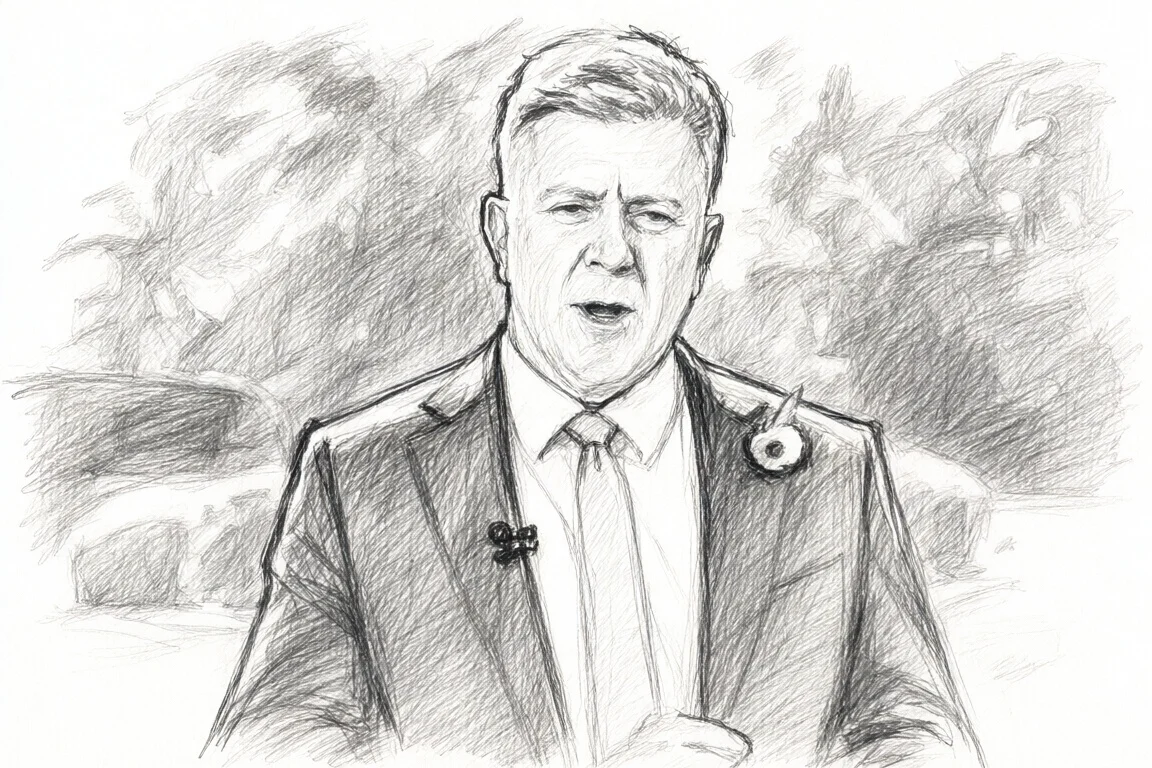
Andy Burnham’s openness to a formal apology put the King’s visit to Antigua and the Commonwealth summit under the same spotlight. Burnham offered dialogue and expressed sorrow, but ruled out financial reparations. The Palace said the King would speak with “unflinching honesty” and “sincere sorrow”, while leaving any decision on an apology to the government. Caribbean leaders and campaigners were asking a more practical question: what would follow an apology?
Channel 4 foregrounded the history and reparative justice, including arguments about debt relief and the continuing effects of slavery. Sky News combined the royal diplomacy with campaigners’ calls for repair. ITV focused on the Antiguan prime minister’s response and the UK government’s refusal of compensation. GB News treated Burnham’s remarks as an apology-and-reparations dispute, with guests arguing against an apology and giving little space to Caribbean voices. The difference was not simply whether an apology was likely. It was whether the coverage treated the question as a royal and political problem, or as a debate about what redress might mean.
Protest coverage moved between a broad grievance and scenes of disorder
Reports from France, Germany and elsewhere in Europe linked demonstrations to the cost of living, housing, schools and public services. They also gave prominent space to looting, clashes and arrests. The scale and emphasis shifted between bulletins: French turnout was reported as 320,000 by the government, while some accounts rounded it to more than 300,000; arrest figures also varied as the reporting developed. BBC News described the crowds as still significant while noting that numbers might be waning. Channel 4 called the events a Gen Z rebellion; ITV gave more room to officials condemning violence and protesters’ complaints.
Those descriptions do not reduce to a single account of the weekend. The reports covered different places and moments, from mostly peaceful marches to later violence. Channel 4 connected the unrest to housing protests and student movements elsewhere. Channel 5 kept to a shorter account of the French turnout and German arrests. The choice of whether to lead with the grievance, the crowd or the disorder changed the story viewers encountered.
A running day, from an F1 title chase to political arguments
Some coverage changed as the day went on. BBC News discussed Kimi Antonelli’s chance to become Formula One’s youngest champion before the race; BBC One West followed through to his third-place finish and the title. Sky News later carried the result as breaking news. The transition from possibility to outcome gave the sports story a clear arc within the day’s bulletins.
Elsewhere, the US midterms were presented through different lenses: national control of Congress, local voters’ concerns about prices and immigration, or the effect a result might have on Donald Trump. Budget arguments occupied several programmes, from Andy Haldane’s warning about fiscal credibility to a combative GB News interview over taxes and welfare. Other reports included the Spain train crash, Palestine Action arrests, and Israeli strikes in Gaza. Across the sample, a handful of stories received sharply different treatment, while many others appeared in a single channel or a short bulletin. The day’s shape came from that mix: a sustained humanitarian story, a live argument over apology and repair, protests described through both cause and confrontation, and news that changed as events unfolded.
The day's stories
Every story that got more than a minute of airtime, ranked by how much it got across all channels.
- 1King Charles ends Caribbean tour with unity warning
- 2Final weekend campaigning ahead of US midterms
- 3German youth protests turn violent as cost-of-living unrest spreads across Europe
- 4Andy Haldane gives Budget four out of ten and warns fiscal risks remainonly BBC News
- 5Civilians evacuated from Oleshky under local ceasefire
- 6John Healey's budget criticised as 'small beer' on growth and defence
- 7Henry Nowak's family criticise police footage and prepare watchdog accusations
- 8Kimi Antonelli could seal youngest F1 title in Mexico
- 9Treasury minister denies Budget tax rises on savers and landlords break manifestoonly GB News
- 10Badenoch criticises Budget and outlines Conservative tax and welfare plans
- 11John Healey confirms 3% defence target by 2030 but funding plan waits for spending review
- 12Chancellor John Healey says welfare bill will fall but sets no savings timetable
How the channels split it
What led the news
The story each channel gave the most airtime in the opening ten minutes of its flagship broadcast.
3 channels led with “King Charles ends Caribbean tour with unity warning”; BBC News led with “German youth protests turn violent as cost-of-living unrest spreads across Europe”; BBC One led with “Final weekend campaigning ahead of US midterms”; and 2 others.
- BBC News German youth protests turn violent as cost-of-living unrest spreads across Europe BBC News · 15:00 GMT
- BBC One Final weekend campaigning ahead of US midterms BBC News and Weather · 22:00 GMT
- Channel 4 King Charles ends Caribbean tour with unity warning Channel 4 News · 18:30 GMT
- Channel 5 King Charles ends Caribbean tour with unity warning 5 News Weekend · 18:50 GMT
- GB News Emma Reynolds denies Budget breaches Labour manifesto tax pledges The Camilla Tominey Show · 18:00 GMT
- ITV Henry Nowak's family criticise police footage and prepare watchdog accusations ITV News · 22:00 GMT
- Sky News King Charles ends Caribbean tour with unity warning Sky News Today · 15:00 GMT
Who covered what
The same day broken into topics, by which channels ran each one — and how much airtime they gave.
| Topic | Channel 5 | BBC News | BBC One | Channel 4 | GB News | ITV | Sky News |
|---|---|---|---|---|---|---|---|
| Reparations (international) ↓ | — | 4m 32s 4.7% | 11m 56s 11.8% | 7m 28s 34.2% | — | 3m 29s 11.2% | 18m 30s 20.1% |
| US Midterms (politics) ↓ | — | 2m 23s 2.5% | 25m 49s 25.5% | 3m 11s 14.6% | — | 4m 12.8% | 8m 5s 8.8% |
| European Protests (international) ↓ | — | 7m 23s 7.6% | 2m 48s 2.8% | — | — | 1m 49s 5.8% | 3m 54s 4.2% |
| Formula One (sport) ↓ | — | 6m 48s 7.0% | 4m 42s 4.6% | — | — | 1m 46s 5.7% | 1m 46s 1.9% |
| King Charles (politics) ↓ | 24s 19.4% | 9m 10s 9.4% | — | — | — | 2m 39s 8.5% | 11m 3s 12.0% |
| Knife Crime (crime) ↓ | 22s 17.7% | — | 3m 1s 3.0% | 1m 36s 7.3% | — | — | 2m 10s 2.4% |
| Brexit (politics) ↓ | — | 5m 5.1% | — | — | 6m 20s 9.0% | — | 3m 44s 4.1% |
| Cost of Living (economy) ↓ | 21s 16.9% | — | — | 2m 59s 13.7% | — | 38s 2.0% | — |
| UK Budget (politics) ↓ | — | 27m 45s 28.5% | 18m 17.8% | — | 15m 21.3% | — | — |
| Henry Novak (crime) ↓ | — | — | 1m 2s 1.0% | — | — | 15m 18s 49.0% | — |
| India Election (international) ↓ | — | 2m 6s 2.2% | 1m 56s 1.9% | — | — | — | — |
| Manchester United (sport) ↓ | — | 2m 16s 2.3% | — | — | — | — | 1m 50s 2.0% |
| Premier League (sport) ↓ | — | 2m 39s 2.7% | — | — | — | 1m 16s 4.1% | — |
| Ukraine (war) ↓ | — | 13m 53s 14.3% | — | — | — | — | 12m 4s 13.1% |
| Welfare (politics) ↓ | — | — | 11m 19s 11.2% | — | 6m 40s 9.5% | — | — |
| Arsenal (sport) | — | — | — | 1m 10s 5.3% | — | — | — |
| Aviation Accident (transport) | — | — | — | — | — | — | 45s 0.8% |
| Conservatives (politics) | — | — | — | — | 13m 13s 18.8% | — | — |
| Defence (politics) | — | — | 11m 44s 11.6% | — | — | — | — |
| Domestic Violence (crime) | — | — | — | — | — | — | 3m 11s 3.5% |
| France Protests (international) | — | 2m 30s 2.6% | — | — | — | — | — |
| Gaza (health) | — | 1m 48s 1.9% | — | — | — | — | — |
| Gen Z (economy) | — | — | 2m 49s 2.8% | — | — | — | — |
| Germany Protests (international) | — | — | — | — | — | 18s 1.0% | — |
| Green Party (politics) | — | — | 3m 15s 3.2% | — | — | — | — |
| Halloween (society) | — | — | — | — | — | — | 1m 41s 1.8% |
| Heidi Klum (media) | 16s 12.9% | — | — | — | — | — | — |
| Housing (economy) | — | — | — | — | — | — | 1m 3s 1.1% |
| Jade's Law (crime) | — | — | — | — | — | — | 6m 20s 6.9% |
| Labour (politics) | — | — | — | — | 9m 42s 13.8% | — | — |
| Liberal Democrats (politics) | — | — | — | — | 9m 39s 13.7% | — | — |
| Palestine Action (crime) | 20s 16.1% | — | — | — | — | — | — |
| Rail Accident (transport) | — | — | — | — | — | — | 1m 48s 2.0% |
| Reform UK (politics) | — | — | — | — | 9m 55s 14.1% | — | — |
| Royal Family (other) | — | — | — | — | — | — | 6m 29s 7.0% |
| Serbia (international) | — | 3m 39s 3.8% | — | — | — | — | — |
| Spain Train Crash (transport) | 21s 16.9% | — | — | — | — | — | — |
| Syria (international) | — | — | — | 5m 25s 24.8% | — | — | — |
| The Traitors (media) | — | 5m 24s 5.6% | — | — | — | — | — |
| Ukraine War (war) | — | — | — | — | — | — | 6m 28s 7.0% |
| US-Iran (international) | — | — | — | — | — | — | 1m 15s 1.4% |
| Youth Protests (international) | — | — | 2m 48s 2.8% | — | — | — | — |
Channel colours are identity only and imply no ranking or political lean.
Stories some channels skipped
The holes in the grid above that we judged notable: stories some channels ran and others did not. On live days this shows provisional coverage so far.
high
Reparations
GB News had a roughly 70-minute bulletin with only 7 topics but omitted Reparations, which received over 18 minutes on Sky News and strong coverage on four other channels.
high
US Midterms
GB News had a roughly 70-minute bulletin but omitted the US Midterms, a major political story covered by all five other major channels.
medium
European Protests
GB News had a roughly 70-minute bulletin but omitted European Protests, which drew over 7 minutes on BBC NEWS and nearly 4 minutes on Sky News while being covered by four channels.
medium
King Charles
BBC ONE West had a bulletin of over an hour and a half and GB News had a roughly 70-minute bulletin, yet both omitted King Charles, a story that received over 9 minutes on BBC NEWS and over 11 minutes on Sky News.
medium
Knife Crime
BBC NEWS had a bulletin of over an hour and a half and ITV1 had a 31-minute bulletin, but both omitted Knife Crime while carrying lighter sport or media items; the story received around 2 to 3 minutes on BBC ONE West, Channel 4 and Sky News.
Stories only one channel ran
The mirror image of the section above: one channel gave these real airtime and no other channel touched them, across the story's whole run.
Channel priorities
The same day read per channel: what each one focused on most, and the topics it covered more than its rivals.
How similar channels were
Every pair of channels scored against each other — higher means the two prioritised the same stories.
| Channel Similarity | Channel 5 | BBC News | BBC One | Channel 4 | GB News | ITV | Sky News |
|---|---|---|---|---|---|---|---|
| Channel 5 | 100% | 12% | 3% | 18% | 0% | 9% | 21% |
| BBC News | 12% | 100% | 49% | 11% | 45% | 13% | 42% |
| BBC One | 3% | 49% | 100% | 44% | 32% | 27% | 41% |
| Channel 4 | 18% | 11% | 44% | 100% | 0% | 23% | 55% |
| GB News | 0% | 45% | 32% | 0% | 100% | 0% | 3% |
| ITV | 9% | 13% | 27% | 23% | 0% | 100% | 28% |
| Sky News | 21% | 42% | 41% | 55% | 3% | 28% | 100% |
Values show the cosine similarity of topic airtime share vectors. Higher percentage indicates more similar editorial focus and airtime weighting.
In detail
What was reported
The full account of the day's biggest stories, built from every channel that covered each one.
Ukraine
Coverage on BBC One and Sky News centred on the evacuation of residents from the Russian-occupied town of Oleshky under a brief humanitarian ceasefire, and on wider developments in the war. BBC One reported that evacuees reached northern Ukraine and were reunited with relatives after travelling through Crimea, Russia and Belarus, with residents given a four-hour window and a convoy of up to 25 buses for as many as 750 people. It said President Zelensky hoped those remaining would still receive aid. Sky News reported that the ceasefire was used by Russian forces to reinforce positions around Oleshky, citing drone footage it described as exclusive and Ukrainian military sources; it said Russian soldiers appeared to move troops, equipment and supplies, remove humanitarian aid, and take bodies from the hospital and morgue under Russian supervision. Sky News said the Russian Ministry of Defence had not replied to a request for comment. BBC One also reported a Kherson official saying there was no shelling during the ceasefire but that he expected more Russian attacks from Monday and that Russian forces had used the pause to bring in weapons, ammunition, drones and supplies. Separately, BBC One reported that the US State Department had approved the sale of 500 Patriot interceptor missiles to Ukraine, worth more than $2bn, paid for by Canada, Germany and Norway, with delivery potentially taking months or years and President Zelensky saying they were needed now.
Key Claims
- A brief humanitarian ceasefire in Oleshky allowed residents to leave and be reunited with family and friends in northern Ukraine. — BBC One, Sky News
- The Oleshky ceasefire was brokered by US First Lady Melania Trump and the Pope. — BBC One, Sky News
- BBC ONE West named the Pope as Pope Leo. — BBC One
- Residents had a four-hour window to leave, with a convoy of 25 buses brought in for up to 750 evacuees. — BBC One
- Evacuees travelled to Ukraine via Belarus after passing through Crimea and Russia. — BBC One
- Sky News reported drone footage it described as exclusive that appeared to show Russian forces moving troops, heavy equipment and supplies into Oleshky under the ceasefire. — Sky News
- Sky News reported that Russian soldiers appeared to remove humanitarian supplies after civilians gathered for aid. — Sky News
- Sky News reported that bodies were taken from the hospital and morgue under Russian supervision, with residents saying the dead had been killed in violent circumstances rather than natural causes. — Sky News
- Sky News reported that Ukrainian military intelligence said one vehicle from the evacuation convoy peeled off and delivered supplies to Russian soldiers. — Sky News
- Sky News reported that the Russian Ministry of Defence had not responded to requests for comment on allegations of ceasefire violations. — Sky News
- BBC ONE West reported a Kherson regional official saying no shelling was recorded during the ceasefire and that people could move around more freely. — BBC One
- BBC ONE West reported the same Kherson official saying he expected more Russian attacks on Kherson from Monday and that Russian forces had used the ceasefire to bring in more weapons, ammunition, drones and supplies. — BBC One
- BBC ONE West reported that the US State Department had approved the sale of 500 Patriot interceptor missiles to Ukraine worth more than $2bn, paid for by Canada, Germany and Norway. — BBC One
- BBC ONE West reported that delivery of the Patriot interceptors could take months or years, with President Zelensky saying Ukraine needed them immediately. — BBC One
- Sky News guests described the Oleshky ceasefire as not a nationwide ceasefire and questioned whether it could be a blueprint for the rest of the country. — Sky News
This is a cross-channel consensus summary, not an objective account. Consensus can be uniformly wrong, or omit what only one channel covered.
Cost of Living
Channels reported that cost of living protests across Europe had led to unrest in several cities the previous night. In Germany, ITV1 said a youth-led movement rallied in more than 30 cities over school funding, the high cost of living and public spending cuts. 5 and ITV1 reported that demonstrations later turned violent in Frankfurt, where shops were looted. Channel 4 reported masked rioters attacking police and looting shops, including a gun store, and said police used tear gas; 5 reported police used water cannons and that the city's mayor said 54 people were arrested and 100 officers were injured. Channel 4 described the Frankfurt unrest as occurring for a third weekend in a row and reported that German protesters called for more investment in social services, education and climate protection, with some opposing proposals for compulsory military service. It also reported protests in Switzerland, Portugal, Albania and Serbia.
In France, 5 reported that more than 320,000 people took to the streets and 779 were arrested. ITV1 reported an estimated 300,000 people and described the action as the third consecutive weekend, saying the demonstrations were mostly peaceful with tensions in some areas. Channel 4 said protests there were largely peaceful but some demonstrators attacked police and set cars on fire. Channel 4 also reported a controversial rent bill in Lisbon that would end rent caps and make evictions easier, and reported that the German protests were part of a wider Gen Z movement inspired by demonstrations in other countries.
Key Claims
- Cost of living protests took place in Germany and France, and some demonstrations turned violent. — Channel 5, ITV, Channel 4
- In Germany, a youth-led movement rallied in more than 30 cities to protest school underfunding, the high cost of living and public spending cuts. — ITV
- German protesters called for more investment in social services, education and climate protection, and some opposed proposals for compulsory military service. — Channel 4
- Shops were looted in Frankfurt during the protests. — Channel 5, ITV, Channel 4
- A gun store was among the shops looted in Frankfurt. — Channel 4
- Police used water cannons in Frankfurt. — Channel 5
- Police used tear gas to disperse the crowd in Frankfurt. — Channel 4
- 5 reported that the city's mayor said 54 people were arrested and 100 officers were injured. — Channel 5
- The reported size of the French protests differed: 5 said more than 320,000 people took part and 779 were arrested, while ITV1 estimated about 300,000 people. — Channel 5, ITV
- ITV1 reported that the French action was on the third consecutive weekend and that demonstrations were mostly peaceful, with tensions in some areas. — ITV
- Channel 4 reported that the Frankfurt unrest happened for a third weekend in a row. — Channel 4
- Channel 4 reported that French protests were largely peaceful, but some demonstrators attacked police and set cars on fire. — Channel 4
- Channel 4 reported protests in Switzerland, Portugal, Albania and Serbia. — Channel 4
- A controversial rent bill in Lisbon would end rent caps and make evicting tenants easier. — Channel 4
This is a cross-channel consensus summary, not an objective account. Consensus can be uniformly wrong, or omit what only one channel covered.
Welfare
Coverage on BBC One and GB News focused on government statements that the welfare bill would be brought down, with legislation planned for next year after reviews by Alan Milburn on youth employment and Stephen Timms on Personal Independence Payment.
BBC One carried an interview in which the Chancellor said the overall benefits bill would come down under Labour, after being challenged over whether she meant only slowing the rate of increase. The Chancellor said the government had already slowed the rate of increase since the election and that some reporting earlier in the week about the timetable for savings was wrong. The BBC One interviewer put it to her that bringing the overall bill down would imply cuts or savings of about £100 billion.
GB News carried an interview in which a government minister said the government would legislate to bring the welfare bill down in a fair and sustainable way. The GB News interviewer put it to the minister that the welfare bill was rising by £30 billion by the end of the Parliament and that the government was not actually cutting welfare. The minister acknowledged that the bill was going up and said she could not set out a timetable before legislation. The minister also said half of the welfare bill is pension costs and discussed the triple lock, and criticised claims by other parties of crude welfare cuts. Both channels indicated the changes would follow the Milburn and Timms reviews, but their questioning highlighted different points of dispute: whether the overall bill would fall or the rate of increase would be slowed, and how a falling bill would relate to the projected rise over this Parliament.
Key Claims
- Government ministers said they would legislate next year to bring the welfare bill down. — BBC One, GB News
- The Chancellor told BBC ONE West that the overall benefits bill will come down under Labour. — BBC One
- The Chancellor told BBC ONE West that the government had already slowed the rate of increase in the benefits bill since the election. — BBC One
- The Chancellor told BBC ONE West that some reporting earlier in the week about the timetable for savings was wrong. — BBC One
- The BBC ONE West interviewer put it to the Chancellor that bringing the overall bill down would imply cuts or savings of about £100 billion. — BBC One
- The government linked its welfare changes to the Milburn review on young people out of work and the Timms review of the Personal Independence Payment system, with proposals due in the new year. — BBC One, GB News
- A government minister told GB News that the welfare bill is going up and that the government would legislate to bring it down in a fair and sustainable way. — GB News
- GB News put to a government minister that the welfare bill is rising by £30 billion by the end of this Parliament and that the government was not actually cutting welfare. — GB News
- A government minister told GB News that she could not set out a timetable for bringing the welfare bill down before legislation. — GB News
- A government minister told GB News that half of the welfare bill is pension costs, that the triple lock would continue in this Parliament and that it would be amended in the next Parliament to rise with inflation or 2.5%. — GB News
- A government minister told GB News that other parties such as the Conservatives and Reform claim crude welfare cuts and that the previous Conservative government did not manage crude cuts because pushing people into crisis shifts costs elsewhere. — GB News
- The Chancellor told BBC ONE West that a million young people are not in employment, education or training and called this a national scandal. — BBC One
This is a cross-channel consensus summary, not an objective account. Consensus can be uniformly wrong, or omit what only one channel covered.
UK Budget
BBC One and GB News discussed the aftermath of Chancellor John Healey's first budget. BBC One reported that the budget was presented on Wednesday and included short-term support such as cash for energy bills, bus fares and tax relief for small businesses. It said the Chancellor described the budget as radical and said it offered hope for the future, while Kemi Badenoch claimed there was a tax bombshell on the way and a black hole in the budget. BBC One's discussion included Andy Haldane saying the budget did relatively little to appease market fears and was a no score draw for growth and fiscal credibility, Nicola Sturgeon saying the jury was out and public anger could follow if the budget was not a down payment on radical reform, and Admiral Sir Tony Radakin saying defence spending commitments to 3.5% by 2035 had not yet been matched by detailed plans or allocated funding. BBC One also reported that big choices, including how to pay for defence spending increases, had been left on hold, and that John Healey had previously resigned as Keir Starmer's defence secretary over defence funding. On GB News, Chief Secretary to the Treasury Emma Reynolds was challenged over whether the budget breached the Labour manifesto by raising income tax on rents and interest. Reynolds said the manifesto was not breached because the headline rate of income tax, VAT and employee national insurance were not increased, and she described an additional 2% on property and savings tax bands as not income tax. The interviewer cited pie shop owner Paul Bowen, who said he would need to bake 30,000 extra pies a week to cover additional costs. Reynolds pointed to business rates relief and to targeted tax rises, including higher corporation tax on banks, to fund measures such as £100 energy support for some council tax bands, a temporary VAT removal from electricity and an extension of the fuel duty cut. On welfare, she said the bill was rising by 30 billion pounds by the end of the Parliament, that half of it was pension costs, and that the government would legislate to bring it down while keeping the triple lock this Parliament and amending it in the next Parliament. On defence, the interviewer said spending was at 2.7% and the spending review had been delayed, while Reynolds denied defence spending was being cut and said it was being boosted, with £300 billion over four years and a plan to reach 3% by 2030 to be set out in the spending review next year; she said NATO Secretary General Mark Rutte had welcomed the plans.
Key Claims
- John Healey presented his first budget on Wednesday. — BBC One
- The budget included cash for energy bills, bus fares and tax relief for small businesses. — BBC One
- The Chancellor described the budget as radical and said it offered hope for the future. — BBC One
- Kemi Badenoch claimed there was a tax bombshell on the way and a black hole in the budget. — BBC One
- Andy Haldane said the budget did relatively little to appease market fears and described it as a no score draw for growth and fiscal credibility. — BBC One
- Nicola Sturgeon said the jury was out on the budget and that public anger could follow if it was not a down payment on more radical reform. — BBC One
- Admiral Sir Tony Radakin said defence spending commitments to 3.5% by 2035 had not yet been matched by detailed plans or allocated funding for equipment. — BBC One
- John Healey had resigned as Keir Starmer's defence secretary over defence funding before becoming chancellor. — BBC One
- The budget left big choices, including how to pay for defence spending increases, on hold. — BBC One
- The budget breached the Labour manifesto by raising income tax on rents and interest. — GB News
- The manifesto was not breached because the headline rate of income tax, VAT and employee national insurance were not increased. — GB News
- An additional 2% on property and savings tax bands was not the same as income tax. — GB News
- Pie shop owner Paul Bowen said he would need to bake 30,000 extra pies a week to cover additional costs. — GB News
- Increased corporation tax on banks would pay for measures including £100 energy support for families in council tax bands A to D, VAT off electricity for a further three months and an extension of the fuel duty cut. — GB News
- 70,000 small high street businesses were taken out of business rates altogether and business rates were frozen for many other small businesses. — GB News
- The welfare bill was rising by 30 billion pounds by the end of the Parliament and the government would legislate to bring it down in a fair and sustainable way. — GB News
- Half of the welfare bill was pension costs and the triple lock would be kept this Parliament and amended in the next Parliament so pensions rise by inflation or 2.5%. — GB News
- Defence spending was at 2.7% of GDP and the defence spending review had been delayed, with the MOD budget in the next two financial years one billion pounds a year less than Rachel Reeves had accounted for. — GB News
- Defence spending was not being cut but boosted, with £300 billion over four years and a plan to reach 3% by 2030 to be set out in the spending review next year. — GB News
- Mark Rutte had welcomed the government's defence plans. — GB News
This is a cross-channel consensus summary, not an objective account. Consensus can be uniformly wrong, or omit what only one channel covered.
Premier League
BBC News reported that Manchester City were still top of the Premier League at the time of its bulletin but that Arsenal could replace them with a point or better at Liverpool that afternoon. It said City had lost 1-0 at home to Brighton, with Yasin Ayari scoring, and that Brighton had beaten both City and Arsenal that season and were third. BBC News also reported that Chelsea beat Manchester United 2-0, with Cole Palmer scoring a penalty, leaving Chelsea fourth and United fourth from bottom. It reported that Tottenham beat Crystal Palace, helped by an early red card and a second-half goal from Jan Paul Van Hecke, taking Spurs into the top half and leaving Palace in the bottom three. BBC News noted that Arsenal had not won at Anfield since 2012.
ITV1 reported that Arsenal won 1-0 at Anfield in the Premier League, ending a run of 13 attempts without a win there, and moved three points clear at the top. It reported that Liverpool appealed for penalties and that Alexis Mac Allister missed a chance, while a later collision between Mac Allister and Noni Madueke after a brush of heads did not produce a penalty.
Key Claims
- BBC News only: Chelsea beat Manchester United 2-0, with Cole Palmer scoring a penalty to make it 2-0; Chelsea moved up to fourth and Manchester United were fourth from bottom. — BBC News
- BBC News only: Manchester City were still top of the Premier League but only just, and Arsenal could replace them with a point or better at Liverpool that afternoon. — BBC News
- BBC News only: Manchester City lost 1-0 at home to Brighton, with Yasin Ayari scoring, and Brighton had now beaten both Manchester City and Arsenal that season and were third in the table. — BBC News
- BBC News only: Tottenham beat Crystal Palace, helped by an early red card for Palace, with Jan Paul Van Hecke scoring in the second half; the win took Spurs into the top half and left Palace in the bottom three. — BBC News
- Both channels noted Arsenal's long run without a win at Anfield: BBC News said Arsenal had not won there since 2012, while ITV1 said Arsenal had not won at Anfield in 13 attempts before this match. — BBC News, ITV
- ITV1 only: Arsenal beat Liverpool 1-0 at Anfield in the Premier League and moved three points clear at the top. — ITV
- ITV1 only: Liverpool appealed for penalties during the match, Alexis Mac Allister missed a chance, and a later collision between Mac Allister and Noni Madueke after a brush of heads did not produce a penalty. — ITV
- BBC News only: Liverpool and Arsenal had both been involved in EFL Cup penalty shoot-outs earlier in the week, with Chelsea losing to Liverpool and Arsenal losing to Fleetwood. — BBC News
This is a cross-channel consensus summary, not an objective account. Consensus can be uniformly wrong, or omit what only one channel covered.
Henry Novak
BBC One and ITV1 reported that the family of Henry Nowak, an 18-year-old student, had spoken publicly about his murder. He was fatally stabbed in Southampton in December last year. BBC One reported that he was stabbed five times as he walked home from a night out with friends. ITV1 reported that his killer was 23-year-old Vikram Digwa.
BBC One reported that Digwa had falsely told police that Nowak had racially abused him. ITV1 reported that Digwa had claimed he was racially abused and had acted in self-defence, which ITV1 said was not true. ITV1 reported that police camera footage showed officers wrongly arresting Nowak, and that it took more than 24 hours for police to identify him and tell his family he was dead. BBC One reported that the family told ITV News their distress was made worse by watching police footage of officers handcuffing him as he lay dying.
Both channels carried an account from Nowak's mother, identified by BBC One as Lucy Ross, that police came to her door at about one o'clock in the morning and told her Henry had died after an altercation. ITV1 reported that the family had chosen to speak for the first time in a special ITV Tonight documentary, and that they also wanted to discuss their treatment by police and the police watchdog.
Key Claims
- Henry Nowak was 18 years old. — BBC One, ITV
- Henry Nowak was fatally stabbed in Southampton in December last year. — BBC One, ITV
- Henry Nowak was stabbed five times as he walked home from a night out with friends. — BBC One
- Henry Nowak's killer was Vikram Digwa. — BBC One, ITV
- Vikram Digwa was 23 years old. — ITV
- Vikram Digwa falsely told police that Henry Nowak had racially abused him. — BBC One
- Vikram Digwa claimed he had been racially abused and had acted in self-defence, and ITV1 reported that this was not true. — ITV
- Henry Nowak was studying at Southampton University. — ITV
- Police camera footage showed officers wrongly arresting Henry Nowak. — ITV
- Police footage showed officers handcuffing Henry Nowak as he lay dying. — BBC One
- The family said their distress was made worse by watching police footage of officers handcuffing Henry Nowak as he lay dying. — BBC One
- Police took more than 24 hours to identify Henry Nowak and tell his family he was dead. — ITV
- Henry Nowak's mother described police arriving at her door at about one o'clock in the morning and telling her he had died after an altercation. — BBC One, ITV
- The family chose to speak for the first time to ITV News for a special ITV Tonight documentary. — ITV
- The family wanted to discuss their treatment by police and the police watchdog. — ITV
- An ITV Tonight special, 'Dear Henry, or Fight For Justice', was scheduled for 9pm on Thursday 5 November on ITV1, ITVX, STV and the ITV News YouTube channel. — ITV
This is a cross-channel consensus summary, not an objective account. Consensus can be uniformly wrong, or omit what only one channel covered.
Knife Crime
BBC One and Sky News reported that five teenage boys were seriously injured in a stabbing at a Halloween party in Chandler's Ford, Hampshire. The channels said police were called just after 10.30pm on the night before the coverage aired after reports that boys had been stabbed, and all five were taken to hospital with serious injuries. BBC One reported that the injured were three 16-year-olds and two 17-year-olds, while Sky News said the group included three aged 16 and two aged 70, a difference between the two accounts.
Both channels reported that police believed an unknown group had gained entry to the party before the stabbings. Police appealed for witnesses and for CCTV, dashcam, doorbell camera and mobile phone footage, according to the channels. BBC One also reported comments from the MP for Eastleigh, Liz Jarvis, who said her thoughts were with the victims and their families and asked people not to speculate or share unverified information online. Sky News reported that police were focusing their inquiry on the party and the Park Road and Valley Road area, and said officers would be at the scene to reassure the community.
Key Claims
- Five teenage boys were seriously injured in a stabbing at a Halloween party in Chandler's Ford, Hampshire. — BBC One, Sky News
- Police were called just after 10.30pm on the night before the coverage aired. — BBC One, Sky News
- All five injured boys were taken to hospital with serious injuries. — BBC One, Sky News
- The channels gave different ages for two of the injured boys: BBC ONE West reported three 16-year-olds and two 17-year-olds, while Sky News reported three aged 16 and two aged 70. — BBC One, Sky News
- Police believed an unknown group had gained entry to the party before the stabbings. — BBC One, Sky News
- Police appealed for witnesses and for CCTV, dashcam and doorbell camera footage. — BBC One, Sky News
- Sky News reported that police were also interested in mobile phone footage from the party. — Sky News
- BBC ONE West reported that a witness saw someone running out of the house shouting that he had been attacked and being chased by two people. — BBC One
- BBC ONE West reported that another witness saw an air ambulance at the scene. — BBC One
- BBC ONE West reported that Liz Jarvis, MP for Eastleigh, said her thoughts were with the victims and their families and asked people not to speculate or share unverified information online. — BBC One
- Sky News reported that police were focusing their inquiry on the party and the Park Road and Valley Road area. — Sky News
- Sky News reported that police said officers would be at the scene to reassure the community and gave 101 as a contact number. — Sky News
This is a cross-channel consensus summary, not an objective account. Consensus can be uniformly wrong, or omit what only one channel covered.
India Election
BBC One and BBC News reported an opposition-led protest in Delhi calling for the resignation of India's chief election commissioner over a revision of voter lists. BBC One reported that tens of thousands of people gathered for a rally organised by the opposition INDIA bloc, led by Rahul Gandhi's Congress party, and described it as the latest in more than a month of elections challenging Prime Minister Narendra Modi's government. BBC News reported that the Opposition Alliance was leading the protest and that criticism had grown over the removal of 130 million names from draft rolls across India.
Both channels reported that Rahul Gandhi was driven through the march and that some protesters carried placards reading "voter theft" and used fake ballot boxes. They said protesters were demanding the resignation of the chief election commissioner. BBC News named the commissioner as Gyanesh Kumar. The government and election commission were reported as saying the revision was necessary and long overdue to remove duplicate or ineligible entries, and BBC One reported that voters could appeal to have names restored. BBC News reported that the opposition said the move could benefit the governing BJP, and that thousands of security personnel were deployed around the protest venue.
Both channels described recent youth-led or Gen Z protests and said the Cockroach Janta Party had faced detentions and police clampdowns, limiting the scale of its protests. They differed in one detail: BBC One said Congress and opposition leaders and student wings had drawn more numbers than the CJP, while BBC News said they had drawn more numbers than the BJP.
Key Claims
- Tens of thousands of people converged on Delhi for a rally demanding the resignation of the chief election commissioner over a controversial revision of voter lists. — BBC One
- The Delhi rally was organised by the opposition INDIA bloc, led by Rahul Gandhi's Congress party; BBC NEWS described it as an Opposition Alliance-led protest. — BBC One, BBC News
- The gathering was the latest in more than a month of elections challenging Prime Minister Narendra Modi's government. — BBC One
- Rahul Gandhi was driven through the march. — BBC One, BBC News
- Some protesters carried placards with the words "voter theft" and used fake ballot boxes. — BBC One, BBC News
- Protesters were demanding the resignation of the chief election commissioner. — BBC One, BBC News
- The chief election commissioner is Gyanesh Kumar. — BBC News
- The government and election commission said the voter roll revision was necessary and long overdue, aimed at removing duplicate or ineligible entries. — BBC One, BBC News
- Voters could appeal to get their names back on the voter rolls. — BBC One
- There had been growing criticism of the removal of 130 million names from draft rolls across India, and the opposition said the move could benefit the governing BJP. — BBC News
- Thousands of security personnel were deployed around the protest venue. — BBC News
- Recent weeks had seen youth-led or Gen Z protests, while many people at this march were older supporters of Congress or allied parties. — BBC One, BBC News
- The Cockroach Janta Party had faced multiple detentions and police clampdowns, which limited the scale of its protests. — BBC One, BBC News
- With the CJP's protests limited, Congress and opposition leaders and student wings drew more numbers; BBC ONE West said more than the CJP, while BBC NEWS said more than the BJP. — BBC One, BBC News
This is a cross-channel consensus summary, not an objective account. Consensus can be uniformly wrong, or omit what only one channel covered.
Brexit
Coverage on BBC and Sky News focused on comments by Rachel Reeves, the former chancellor, about the UK's relationship with the European Union. BBC reported that she said Britain's future lies within the EU, and that the prime minister had struck a warmer tone towards Europe. Sky News reported that this was her first intervention since she was sacked as chancellor, and that she said Brexit had made the country poorer, weaker and less secure. Sky News also said Reeves had written a Sunday Times article calling for the UK to return to the EU and welcoming Andy Burnham's contribution to the debate.
Both channels presented the comments as part of a wider discussion inside Labour about its next election position. BBC guests suggested the next Labour manifesto could include wording on rejoining or considering rejoining the EU. Sky News reported that Labour was moving towards a possible manifesto pledge to move closer to Europe. BBC coverage discussed the electoral risks, including red wall seats and the argument that rejoining could help Labour if it were cost neutral. Sky News reported that Labour MPs in red wall seats would be worried, and that Conservative and Reform UK opponents would attack the position.
Sky News also reported comments from Treasury Minister Emma Reynolds that it was right to open a conversation with the British people but that the immediate priority was a better deal with the EU. It said she had campaigned to remain in 2016 and opposed freedom of movement, and it included a claim that one in seven exporting businesses had stopped exporting to the EU. BBC coverage noted that Business and Trade Secretary Jonathan Reynolds had questioned whether joining the customs union would affect other trade deals. Sky News identified a UK-EU summit on 20 November as the next step.
Key Claims
- Rachel Reeves, the former chancellor, said that Britain's future lies inside the European Union. — BBC One, Sky News
- Only Sky News reported that Rachel Reeves said Brexit had made the country poorer, weaker and less secure. — Sky News
- Only Sky News reported that Rachel Reeves made her first intervention since she was sacked as chancellor. — Sky News
- Only BBC coverage reported that the prime minister had struck a warmer tone towards Europe. — BBC One
- Only Sky News reported that Rachel Reeves wrote an article for the Sunday Times in which she said the UK should return to the EU. — Sky News
- Only Sky News reported that Andy Burnham had triggered a debate about the UK's relationship with the EU and that Rachel Reeves welcomed his facing up to the issue. — Sky News
- Only BBC coverage included guests suggesting the next Labour manifesto could include wording on rejoining or considering rejoining the EU. — BBC One
- Only Sky News reported that Labour was moving towards a possible manifesto pledge to move closer to Europe. — Sky News
- Only Sky News reported that Treasury Minister Emma Reynolds said it was right to open a conversation with the British people but that the priority was to get a better deal with the EU. — Sky News
- Only Sky News reported that Emma Reynolds said she campaigned to remain in the EU in 2016 and that she opposed freedom of movement. — Sky News
- Only Sky News coverage included the claim that one in seven exporting businesses had given up exporting to the EU altogether and that this had been economically damaging. — Sky News
- Only BBC coverage reported that Jonathan Reynolds, the business and trade secretary, questioned whether joining the customs union would prevent other trade deals. — BBC One
- Only BBC coverage included a guest saying most people think leaving the EU was a mistake, according to polling. — BBC One
- Only BBC coverage noted large and sometimes violent street protests in France, Italy and Germany. — BBC One
- Only Sky News reported that Labour MPs in red wall seats would be worried about the party moving closer to the EU. — Sky News
- Only Sky News reported that Conservative and Reform UK opponents would attack the position. — Sky News
- Only Sky News identified a UK-EU summit on 20 November as the next step. — Sky News
- Only BBC coverage included a guest saying rejoining could benefit Labour if it were cost neutral, but that it could be endangered in red wall areas by Reform UK. — BBC One
This is a cross-channel consensus summary, not an objective account. Consensus can be uniformly wrong, or omit what only one channel covered.
US Midterms
BBC News reported that it was the final weekend before Tuesday's US midterm elections, and that the vote would decide whether President Trump's Republican Party kept control of Congress. It said recent polling indicated Democrats were likely to gain the House and possibly the Senate, while both chambers were currently controlled by Republicans. The bulletin explained that all 435 House seats were being contested, with 218 needed for control, and that 35 Senate seats were up, with 51 needed for control or a 50-50 split leaving the Vice President to cast the deciding vote, an arrangement it said currently favoured the Republicans. It also noted that Trump was not على the ballot and that the election fell in the last two years of his presidency.
BBC One's discussion treated the elections as consequential for the US and for other countries. It said billions of dollars had been spent on campaigns featuring celebrities, rallies and advertising, and that polling suggested a possible substantial defeat for the President's party while noting that the result was uncertain. Nicola Sturgeon said that if Republicans lost both the House and the Senate, Trump's behaviour could become less predictable and his overseas actions more consequential, with possible effects on energy costs and inflation. Andy said the UK economy was closely tied to US trade and financial markets, and that a domestically constrained Trump might reduce budget deficits but could also redirect pressure internationally. Tony contrasted the Biden administration's approach to Ukraine with Trump's stated aim of ending the war, and said US support remained important but less dominant than before.
Key Claims
- It was the final weekend before Tuesday's US midterm elections. — BBC News
- The midterm elections would determine whether President Trump's Republican Party maintained control of Congress. — BBC News
- Recent polling indicated Democrats were likely to gain control of the House and possibly the Senate. — BBC News
- Both the House of Representatives and the Senate were controlled by Republicans at the time. — BBC News, BBC One
- All 435 House seats were being contested, and 218 seats were needed for control. — BBC News
- 35 Senate seats were being contested, 51 seats were needed for control, and a 50-50 split would let the Vice President cast the deciding vote, favouring Republicans at the time. — BBC News
- President Trump was not on the ballot, and the election fell in the last two years of his presidency. — BBC News
- Billions of dollars had been spent on the midterm campaigns, with celebrities, rallies and advertising. — BBC One
- Polling suggested a possible substantial defeat for Trump's party, but the outcome was uncertain. — BBC One
- Nicola Sturgeon said a Republican loss of both chambers would make Trump less predictable and more likely to act internationally, potentially affecting energy costs and inflation. — BBC One
- Andy said the UK economy was closely tied to US trade and financial markets, and that a domestically constrained Trump might reduce budget deficits while international pressure could raise energy costs and interest rates. — BBC One
- Tony said the main difference between the Trump and Biden White Houses was over Ukraine: Biden supported Ukraine, imposed costs on Russia, maintained unity and avoided escalation, while Trump wanted to end the war, not necessarily justly. — BBC One
- Tony said US support for Ukraine remained important but less dominant than in the past, and that European support had strengthened over time. — BBC One
This is a cross-channel consensus summary, not an objective account. Consensus can be uniformly wrong, or omit what only one channel covered.
European Protests
Channels reported protests in several European countries, with young people demonstrating over the cost of living, education, housing and related issues. BBC News reported that police in Germany clashed with rioters after largely peaceful youth-led protests turned violent, with shops looted in central Frankfurt late last night and incidents in Berlin, Cologne and Hamburg. It said the German demonstrations concerned school underfunding, public spending cuts, living costs and compulsory military service. Sky News reported simultaneous but not coordinated protests in France, Germany, the Netherlands, Italy, Spain and Portugal, with shared concerns including education, health, climate and living costs.
In France, Sky News reported that hundreds of thousands of young people turned out and 70,000 police officers were deployed, with mostly peaceful protests but violence in Paris. BBC News reported that more than 300,000 people marched yesterday, in the third weekend of protests, and that the French Interior Ministry said more than 770 people had been arrested. Sky News reported 560 arrests in France up to last night. BBC News also reported an attempted murder investigation after a Molotov cocktail was thrown at a police officer.
Sky News reported that police cleared protesters from Rossio Square in Lisbon in the early morning after three warnings, with housing costs and a proposed law affecting landlords among the grievances in Portugal. It also reported anti-government protests in Tirana, Albania, and said police there used tear gas, water cannon and batons.
Key Claims
- Protests took place in cities across several European countries, with young people raising concerns including the cost of living, education and housing. — BBC One, Sky News
- In Germany, police clashed with rioters after youth-led protests, shops were looted in central Frankfurt late last night, and other incidents occurred in Berlin, Cologne and Hamburg. — BBC One
- There were 30 youth-led rallies in Germany; police used water cannon in Cologne after stones were thrown, and shop fronts were smashed in Frankfurt. — Sky News
- The German demonstrations were over school underfunding, the high cost of living, cuts to public spending and compulsory military service. — BBC One
- In France, more than 300,000 people marched yesterday, in the third weekend of protests. — BBC One
- The French Interior Ministry said more than 770 people had been arrested. — BBC One
- 560 people had been arrested in France up to last night. — Sky News
- An attempted murder investigation was opened after a Molotov cocktail was thrown at a police officer. — BBC One
- Hundreds of thousands of young people turned out across France and 70,000 police officers were deployed; the protests were mostly peaceful but violence erupted in Paris with tear gas, fires and clashes with officers. — Sky News
- Police cleared protesters from Rossio Square in Lisbon in the early morning after three warnings. — Sky News
- In Portugal, grievances included housing costs and a proposed law benefiting landlords; house prices had doubled since 2017 and rents had risen by more than two thirds since 2020. — Sky News
- Anti-government protests took place in Tirana, Albania, where students joined calls for more investment in education and police used tear gas, water cannon and batons. — Sky News
- The protests were simultaneous but not coordinated, with shared concerns across countries. — Sky News
- The wider protest trend started in France and spread to Italy, Spain and Portugal, with a housing crisis said to have hit the youngest hardest. — BBC One
This is a cross-channel consensus summary, not an objective account. Consensus can be uniformly wrong, or omit what only one channel covered.
King Charles
BBC News and Sky News reported that King Charles was in the Caribbean and was due to address the Commonwealth Heads of Government Meeting in Antigua on Tuesday. Both channels said Buckingham Palace had described the speech as addressing slavery with unflinching honesty and sincere sorrow. They linked the speech to comments by Prime Minister Andy Burnham that he was open to a formal apology for Britain's role in the transatlantic slave trade.
BBC News reported that royal sources said the King had been told about Burnham's remarks in a timely manner, that any apology would be a government matter and that discussions between monarch and prime minister were private. Sky News reported that, according to its royal correspondent, the King would not apologise in Antigua because, as head of the Commonwealth, it would not be appropriate for him to discuss UK government policy, while the conversation about a future apology had moved forward. Sky News also reported calls for reparations, including from the Antiguan Reparations Commission, and that Burnham had ruled out reparations. BBC News included commentary that the King faced a diplomatic balancing act as head of state of several Caribbean countries seeking an apology, and reported on his health and tour schedule.
Key Claims
- Buckingham Palace said King Charles would speak about slavery with unflinching honesty and sincere sorrow when he addresses the Commonwealth Leaders' Summit in Antigua on Tuesday. — BBC News, Sky News
- King Charles had arrived in Antigua for the Commonwealth Heads of Government Meeting on the final leg of a Caribbean tour. — BBC News, Sky News
- Prime Minister Andy Burnham said he was open to a formal apology for Britain's role in the transatlantic slave trade. — BBC News, Sky News
- BBC News reported that royal sources said the King had been told about Burnham's remarks in a timely manner. — BBC News
- BBC News reported that royal sources said any decision to apologise would be a matter for the government and not the monarch, and that they would not discuss whether the King had been consulted because monarch and prime minister conversations are private. — BBC News
- Sky News reported that, according to its royal correspondent, the King would not apologise in Antigua because, as head of the Commonwealth, it would not be appropriate for him to discuss UK government policy, and that the conversation about a future apology had shifted forward significantly. — Sky News
- Sky News reported that Andy Burnham said there would be no reparations. — Sky News
- Sky News reported that the Antiguan Reparations Commission gave a cautious welcome to Burnham's comments, saying an apology would acknowledge responsibility and commit to repairing damage, while continuing to call for negotiations. — Sky News
- Sky News reported that the Prime Minister of the Bahamas told Sky News last week that repair and reparation was not simply money, and that acknowledgement, education and training mattered, while financial reparation could be challenging for government. — Sky News
- BBC News reported commentary that the King faced a difficult balancing act as head of state of several Caribbean islands seeking an apology and reparations. — BBC News
- BBC News reported that the King was carrying out 39 engagements on the trip and was still receiving treatment for cancer, with a commentator saying his health trajectory was positive. — BBC News
- Sky News reported that King Charles would take part in celebrations marking Antigua and Barbuda's Independence Day, 45 years after the islands became a sovereign state. — Sky News
- BBC News reported that royal sources described the past few months as difficult for the King as he balanced family matters with his duties, and that an aide would not be drawn on whether there had been contact with the Duke and Duchess of Sussex. — BBC News
- BBC News reported a royal commentator saying Burnham's statement was a possible U-turn because earlier indications were that there would be no government apology and that an apology was not the King's role. — BBC News
- BBC News reported a royal commentator saying the King had no intention of altering the speech he would give at the Commonwealth meeting. — BBC News
This is a cross-channel consensus summary, not an objective account. Consensus can be uniformly wrong, or omit what only one channel covered.
Reparations
In coverage on 1 November 2026, BBC One reported that the prime minister had suggested an apology to Commonwealth countries for historic wrongs of slavery, while not supporting reparations. It reported that the prime minister was open to a discussion about an apology ahead of the Commonwealth Leaders Conference, and that a formal apology would not mean accepting that British people today should accept financial liability for events hundreds of years ago. Sky News identified the prime minister as Andy Burnham and reported that he was open to a formal apology but said there would be no reparations. Sky News reported that the Antiguan Reparations Commission gave a cautious welcome to the comments, said an apology opened the path to negotiations, and continued to call for reparations.
Key Claims
- The prime minister was reported as open to an apology or a discussion about an apology for historic slavery wrongs, while not supporting reparations. — BBC One, Sky News
- A formal apology would not mean accepting that British people today should accept financial liability for events hundreds of years ago in which they had no role. — BBC One
- The prime minister's remarks were made ahead of the Commonwealth Leaders Conference. — BBC One
- Sky News named the prime minister as Andy Burnham. — Sky News
- The Antiguan Reparations Commission gave a cautious welcome to the prime minister's comments, said an apology opened the path to negotiations, and continued to call for reparations. — Sky News
- Caribbean leaders at the Commonwealth meeting wanted real movement on reparations. — Sky News
- King Charles was in Antigua for the Commonwealth Heads of Government Meeting and was due to address it on Tuesday. — Sky News
- Buckingham Palace said the King's speech would include unflinching honesty, sincere sorrow and respect for wider discussions on reparations. — Sky News
- Sky News reported that the King would not apologise in Antigua because he was speaking as head of the Commonwealth, and that Buckingham Palace had previously said apologies and reparations were a matter for the government. — Sky News
- The Prime Minister of the Bahamas told Sky News last week that repair and reparation was not simply about money, citing acknowledgement, education and training, and said financial reparation could be challenging for government. — Sky News
- A former government adviser said the Commonwealth Secretariat was not fit for purpose and that the summit did not deliver, with Caribbean countries using it as a platform to campaign for reparations. — Sky News
- The Secretary General of the Commonwealth told Sky News that an apology from the King could not hurt. — Sky News
- Government sources told Sky News they supported efforts to make the Commonwealth modern and effective, and said future CHOGM arrangements would be for Commonwealth members collectively. — Sky News
This is a cross-channel consensus summary, not an objective account. Consensus can be uniformly wrong, or omit what only one channel covered.
Manchester United
BBC News and Sky News reported that Manchester United lost 2-0 at Chelsea, with Morgan Rogers scoring the first goal and Cole Palmer converting a penalty after Lisandro Martinez was sent off for a second yellow card. BBC News said United had improved in the first half and should have taken the lead through Bruno Fernandes and Amad Diallo. Sky News said United played well before the break but fell apart in the second half.
BBC News said United were in another difficult period and in a relegation fight nine games into the season, with their last league win coming in August. Sky News said the result left United 17th, just outside the relegation places on goal difference, and extended their run without a league win to nine games, their longest since 1988.
Both channels reported that the defeat increased attention on manager Michael Carrick. Sky News said Carrick expected to remain in charge for the Champions League match against Roma on Tuesday. BBC News said there had been a sense before the Chelsea match that Carrick might be given a little more time, but that the defeat made a longer stay uncertain. BBC News also noted that Carrick won five Premier League titles as a player.
Key Claims
- Manchester United lost 2-0 at Chelsea. — BBC News, Sky News
- Morgan Rogers scored Chelsea's opening goal. — BBC News, Sky News
- Cole Palmer scored a penalty to make the score 2-0. — BBC News, Sky News
- Lisandro Martinez was sent off for a second yellow card. — BBC News, Sky News
- The Lisandro Martinez incident led to a penalty. — BBC News, Sky News
- Lisandro Martinez struck a player with his elbow. — BBC News
- Manchester United had opportunities in the first half and should have taken the lead. — BBC News, Sky News
- Sky News said Manchester United's performance fell apart in the second half. — Sky News
- Manchester United's run without a league win reached nine games, their longest since 1988. — Sky News
- Manchester United were 17th, just outside the relegation places on goal difference. — Sky News
- Manchester United were fourth from bottom of the Premier League. — BBC News
- Michael Carrick expected to remain in charge for Manchester United's Champions League match against Roma. — Sky News
- BBC News reported that there had been a sense before the Chelsea defeat that Michael Carrick might be given a little more time. — BBC News
- Michael Carrick won five Premier League titles as a player. — BBC News
- Manchester United's last league win came in August. — BBC News
- Sky News said fans were still behind Michael Carrick but results were not coming, and that the players did not appear to be playing for him, although they looked better. — Sky News
This is a cross-channel consensus summary, not an objective account. Consensus can be uniformly wrong, or omit what only one channel covered.
Formula One
BBC and Sky News reported that Kimi Antonelli, a 20-year-old driver, was in position to become Formula One's youngest world champion at the Mexico City Grand Prix. Both channels said he would start fourth and needed a top-nine finish to take the title. BBC identified him as a Mercedes driver and reported that he led teammate George Russell by 123 points with five races remaining. Sky News said Antonelli was on the verge of becoming the sport's youngest champion at 20.
Both channels reported that Lewis Hamilton took pole position. BBC said he did so in a Ferrari. Sky News said it was Hamilton's first pole in more than three years, extended his record to 105 career poles, and was secured by nine thousandths of a second from George Russell in the closing stages of qualifying after Russell had looked set to start at the front.
In a BBC interview, Damon Hill said Antonelli had appeared tense and had not qualified as well as usual. Hill said Antonelli needed only a relatively minor performance to secure the title, had performed brilliantly all season, and that winning in only his second full season would be astonishing. Hill also said Hamilton was the oldest driver to be on pole since Mario Andretti in about 1972.
Key Claims
- Kimi Antonelli, a 20-year-old driver, could become Formula One's youngest ever world champion. — BBC News, Sky News
- Antonelli was a Mercedes driver and teammate of George Russell. — BBC News
- Antonelli led the standings by 123 points from George Russell with five races remaining. — BBC News
- Antonelli needed a ninth-place finish or better in the Mexico City Grand Prix to claim the title. — BBC News, Sky News
- Antonelli would start the Mexico City Grand Prix from fourth position. — BBC News, Sky News
- Lewis Hamilton took pole position for the Mexico City Grand Prix. — BBC News, Sky News
- Hamilton took pole position in a Ferrari. — BBC News
- Hamilton's pole was his first in more than three years and extended his career record to 105 pole positions. — Sky News
- Hamilton beat George Russell to pole by nine thousandths of a second in the closing stages of qualifying, after Russell had looked set to start at the front. — Sky News
- Damon Hill said Antonelli had appeared tense and had not qualified as well as he normally does. — BBC News
- Damon Hill said Hamilton was the oldest driver to be on pole position since Mario Andretti in about 1972. — BBC News
- Damon Hill said Antonelli had performed brilliantly all season and that winning the title in only his second full season would be astonishing. — BBC News
This is a cross-channel consensus summary, not an objective account. Consensus can be uniformly wrong, or omit what only one channel covered.
Receipts
Broadcasts analysed
Every broadcast behind this day's analysis — open one to see its story timeline.
- BBC News BBC News 05:00 GMT 4 stories
- Sky News Mornings with Jones and Melbourne 08:00 GMT 6 stories
- BBC News BBC News 08:30 GMT 6 stories
- BBC One Sunday with Laura Kuenssberg 09:00 GMT 6 stories
- Sky News Sky News Today With Matt Barbet 11:30 GMT 4 stories
- BBC One BBC News 13:00 GMT 4 stories
- ITV ITV News 13:30 GMT 2 stories
- BBC News BBC News 15:00 GMT 7 stories
- Sky News Sky News Today 15:00 GMT 7 stories
- BBC One BBC News 17:15 GMT 6 stories
- GB News The Camilla Tominey Show 18:00 GMT 6 stories
- Channel 4 Channel 4 News 18:30 GMT 6 stories
- ITV ITV Evening News 18:30 GMT 4 stories
- Channel 5 5 News Weekend 18:50 GMT 6 stories
- BBC News Newscast 20:30 GMT 1 story
- BBC One BBC News and Weather 22:00 GMT 5 stories
- ITV ITV News 22:00 GMT 5 stories
- Sky News The Wrap With Gillian Joseph 22:00 GMT 5 stories